Showing posts with label biography. Show all posts

Monday, January 12, 2026

Dark Renaissance: The Dangerous times and Fatal Genius of Shakespeare's Greatest Rival by Stephen Greenblatt


Good but the usual Greenblatt treatment - take a subject about whom almost nothing is factually known, and build out the social/intellectual/historical era around the black hole of the character's existence, and posit how he must have participated.

Marlowe is regarded as being Shakespeare's progenitor with his plays TAMBURLAINE, DR. FAUSTUS, and THE JEW OF MALTA. He was the first playwright to succesfully use blank verse in his works, and though Shakespeare surpassed Marlowe by a stunning margin, it's possible to see how Marlowe had to come first.

Watched SHAKESPEARE IN LOVE again last night, in which Kit Marlowe features.

Beethoven: Anguish and Triumph by Jan Swafford


I remember as a child reading a young person's biography of Beethoven - or at least reading the first chapters, where a six year old Ludwig races home through the village streets humming the melody of a composition he's going to give to his mother at her nameday celebration.

This biography is good if stuffed with cultural history of Bonn and Vienna, the other German states and Europe at the end of the 18th century. Lots going on. Meanwhile, Beehoven, preternatually gifted, sullen, isolated, productive, does exactly what he needs to do.

From a junior Mozart/Hayden imitator, he creates incredible music that builds on their example, and then towers over it.

Tuesday, November 05, 2024

Hellfire: The Jerry Lee Lewis Story by Nick Tosches


Hardly lives up to the hype. Tosches' Old Testament doggerel prose style and wandering biographical outline are underwhelming. 

JLL was an astounding performer and musician - and at the same a deeply disturbed addict with many mental health issues, exacerbated by his profound musical genius that had him barely finishing the eighth grade and cutting his first sides for Sun Records at age 15.

It did drive me back into Lewis's music, which I was obsessed with for awhile in my 20s, and which is an incredibly deep pool. Not that rock and roll as such - the original Sun sides were never really improved upon in multiple re-recordings and reissues -- but JLL released an ungodly amount of first-rate country music after his heyday and fall from grace in the 1960s. He was a great singer and showman. 

Will now see out "Jerry Lee Lewis: His Own Story" by Rick Bragg which seems a much more complete, scholarly and un-rabid version of the life.

Monday, September 23, 2024

Beeswing by Richard Thomspon


Good if perfunctory. It stays on relative high impersonal ground, although I liked RT's insights on the folk songs and styles that inspired him. You do get a good sense of the "folk music circuity" in Britain in the 1960s.

Tuesday, August 27, 2024

Lennon: The Man, the Myth, the Music - The Definitive Life by Tim Riley


Liking this so far - great writing and namedropping on music from the Beatles era that influenced/was influenced by them. The later biographical material itself is mostly familiar to me from my other recent readings. The early biographical material about Lennon's childhood is vivid and dramatic.

Tuesday, August 06, 2024

Paul McCartney: Many Years from Now, with Barry Miles


Pretty good, lots on insights, a little annoying in Miles insistence on his own place in the Beatles history, but that's a small point. The chapter on the London cultural and arts scene - when McCartney had bought a house in town, while the other three Beatles had retired to the suburban countryside - is interesting, although McCartney (as always) sound a little glib and fey when discuss art that's not pop and rock songs.

Good source of McCartney's assigning "percentages" of authorship credit to himself and Lennon. Who knows what actually went on? Their whole career was magical and creative and, I'm sure, chaotic. But they wrote 180 songs the likes of which had never been seen before - and won't be seen again.

Thursday, July 18, 2024

Thom Gunn: A Cool Queer Life by Michael Nott


Deeply immersed. Very important poet to me, my first extended deep dive, met him at Northwestern, been reading him and thinking about his work ever since then.

The 1980s section devastating, where Gunn loses dozens of loved ones in the space of a year or so. Unimaginable until now when I read of how he took it full on, trying to survive it and gain some meaning from the carnage. 

And his "old age" as it were, is tragic as presented, although he is never really self-pitying. In his late 60s, he vigorously renewed his passion for drugs and picking up young men as sexual tricks, often homeless and troubled, although he cared for them as he could toward his purpose. He certainly died as he lived, with a fierceness and a care for the person he was with, and did not put on much of the dress of one ageing slowly and gracefully. He did not want that.


Yvor Winters definition of a poem: a statement in words about the human experience (p. 130)

The Sense of Movement was about a "specifically contemporary" kind of "malaise," the attempt "to understand one's deliberate aimlessness, having the courage of one's convictions, reaching a purpose only by making the right rejections." (147)

Gunn's love of Camus, particularly THE PLAGUE. (162)

Gunn on Lowell, and his aims for a personal autobiographical essay (209)

Gunn on Robert Creeley (218)

from TG piece about TOUCH: There remains open the possibility that one can deliberately and consciously attempt to create in oneself a field which will be spontaneously fertile for the tests of sympathy[.]... I do not mean that one can simply love everybody because one wants to, but that one can try to avoid all the situations in which love is impossible. (229)

Gertrude Stein: "She always says she dislikes the abnormal, it is so obvious. She says the normal is so much more simply complicated and interesting."

"Only Tony White, among my close friends, became an exception. He dropped out, coolly and deliberately, from the life of applause, having coming to see how the need for it complicates one's existence quite unnecessarily." 
... loss is loss, and time often only helps to show how deep and wide it is. (296)

Mike Kitay: "Tony Tanner was a good example of a smart friend Thom had, but he didn't like Tony's problems." (303)

"'The proverb is: A cat in gloves catches no mice. [...] I mentioned my proverb to a San Francisco poet, and he capped it with one of his own: And mice in high heels have a terrible time getting away from cats.'" (335)

TG on Duncan's definition of the Romantic movement: "the intellectual adventure of not knowing." (409)

"a poem is a record of activity" (422)

Thom saw these poems [in limited edition Unsought Intimacies] as "distinct from confessional poetry, which is a form of indirect boasting about pain, not so indirect maybe. When there is pain in these poems, it is a cause for deep regret." (431)


Tuesday, January 02, 2024

Dear Boy: The Life of Keith Moon by Tony Fletcher


Jammed with good details - particularly music, TV and film references -- but overwritten and I generally hate Fletcher's effusive and emotive and melodramatic prose.

Sunday, December 17, 2023

Cosmic Scholar: The Life and Times of Harry Smith by John Szwed


Early Abstractions films: various soundtracks added by various people.

The Critic, Ernest Pintoff, short comedy film, Mel Brooks voiceover.

Heaven and Earth Magic.

HS Mahagonny: based on Brecht/Weill opera, The Rise and Fall of the City of Mahagonny

Compo, Seven Flute Solos: https://www.youtube.com/watch?v=nWuFrgzxukc

Shirley Clarke, documentary film maker. Bridges-Go-Round, The Connection, The Cool World, Kaleidoscope (w/ HS)

HS paper airplane collection: https://www.amazon.com/Paper-Airplanes-Collections-Catalogue-Raisonn%C3%A9/dp/0989531139

shape note/sacred harp records

John Fahey summary of contents of HS Anthology of Folk Music: "The evidence is in the shakedown."[169\

HS on what his collections meant: It is a way of fooling away the time, harmlessly as possible. [271]

Make a person think they think and they love you; make them think, and they hate you." [ 332]

HS on "automatic synchronization" of his films--
Fred Camper: ... as I was sitting on the floor near a stack of records, [Harry Smith] said, "Hey, you, pick a record, any record." Without looking... I passed the first record on the stack up to him. He looked at it and aid, "You idiot, not that record." [97]

Duchamp, The Bride Stripped Bare by Her Bachelors, Even


Monday, July 10, 2023

If This Is a Man/The Truce by Primo Levi


This book (two books, actually) is amazing, a take on concentration camps unlike any other I've read. Levi was an Italian Jew who went to Auschwitz for the last ten months of the war. The first volume, IF THIS IS A MAN, contains his sociological, often clinical descriptions of the prison camp industry is astounding, how even with almost nothing the prisoners still had a "thriving" economy of barter and favoritism which seemed, perversely, to keep the survivors sane as 90% of the other inmates disappeared into the crematoriums. Sane in spite of the sickness, the filth, the freezing temperatures, the backbreaking labor.

The second book, THE TRUCE, follows his circuitous journey home after liberation, a winding trail through Eastern Europe and Russia which took over a year.

Sunday, February 13, 2022

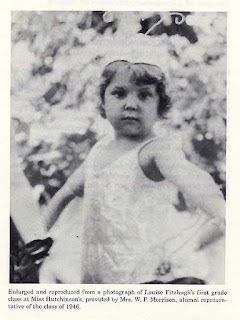
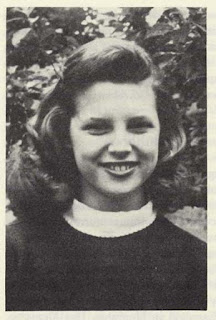
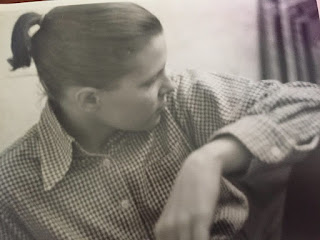
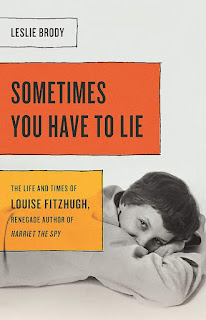
SOMETIMES YOU HAVE TO LIE: The Life and Times of Louise Fitzhugh, Renegade Author of Harriet the Spy By Leslie Brody


Interesting if thin biography of Fitzhugh. There was an earlier one from 1991 by Virginia Wolf that is apparently more scholarly. This one is decidedly not. Brody does a lot of speculation about what Harriet might have done, whom she might have, how she might have felt. She does talk to secondary sources, and has some access to correspondence. Her lifelong correspondence with James Merrill and Peter Taylor would be interesting to see. But the photo section is  paltry and it seems like an entire book could be made of Fitzhugh's paintings, drawings, and illustrations. Each published book is plot summarized at length. There's a lengthy afterword explaining the tight control over her unpublished work exercised by her estate (which I would have preferred as a preface). And Fitzhugh's final years are covered in snap - she died suddenly of a brain aneurysm in 1974 at the age of 46. And the decline must have been sad.

She drank too much and seemed to suffer from manic depression/bipolar. There is a real sadness behind it all that is intermittently touched upon.

Fitzhugh was a monumental figure in both her revolutionizing of children's literature, and the strong unapologetic presentation of her sexuality.


Tuesday, July 06, 2021

Home Before Dark by Susan Cheever


Interesting companion book along with John Cheever's own fiction in journals. SC is a bit of a poseur, but she quotes eloquently from her father's writing and from what others wrote about him.

"He was a man who made his own world in relative isolation from most of his kind,"  my brother Fred wrote when I asked him to put down what he remembered about our father. "As a result he had to live with his own impulses and perceptions in ways that most of us can avoid. No one, absolutely no one shared his life with him. There was no one from whom he could get honest advice. Of course this state of affairs was very much his own doing, but it must have been hard sometimes." (p. 154-155)

'My incantation has changed,'' he wrote in 1969 after ''Bullet Park'' had been panned by the critics and his alcoholism was worse and most of the money was spent. ''I am no longer sitting under an apple tree in clean chinos reading. I am sitting naked in the yellow chair in the dining room. In my hand there is a large crystal glass filled to the brim with honey colored whiskey. There are two ice cubes in the whiskey. I am smoking six or seven cigarettes and thinking contentedly about my interesting travels in Egypt and Russia. When the glass is empty I fill it again with ice and whiskey and light another cigarette although there are several burning in the ashtray. I am sitting naked in a yellow chair drinking whiskey and smoking six or seven cigarettes.'' (p. 155)

Wednesday, May 05, 2021

Cheever: A Life by Blake Bailey

Really enjoying this earlier title by the cancelled Blake Bailey.


JC came to admire the style as typical of a certain nautical New England mentality that "makes as little as possible of any event." [11]

"As my mother often pointed out," Cheever said, "she drank two Manhattan cocktails that evening. Otherwise I would have remained unborn on a star." [20]

"I think of Europe as a rat-toothed bitch." (1934, from 'Letter from the Mountains.) [70]

"The short story is determined by moving around from place to place, by the interrupted event. The vigorous nineteenth-century novel is based on parish life and a lack of communications." [195]

Malcolm Cowley advice: "Take some situation like the one you treated in Goodbye, My Brother, and work back (not forward) till the characters assumed their full roundness." [101]

"I realized that my father was a better writer than I, and using his style I went on then to invent a character and a life that would have gratified him." (on creating Leander for Wapshot Chronicle) [216]

"The writers explained that—aside from the indifference of publishers—to collect short stories is something like marrying many times and collecting all your wives under one roof on a rainy day. Furthermore, collections of short stories are usually reviewed in tandem or four-inhand and in an atmosphere of combativeness (X is more sensitive than Y) that overlooks the fact, known to most writers, that to make sense out of life is an exertion of uncommon cooperativeness." (from JC Author's Note to Stories) [233]

reax to Wapshot Chronicle: 
“Cheever's venture is exuberantly, cantankerously, absurdly, audaciously alive,” wrote Glendy Culligan, who also found the book “brilliant, ebullient, alternately sad, funny and tender …”  And then there were critics who thought Cheever had decidedly broken loose —not only advancing on previous work, but (as Fanny Butcher claimed in the Chicago Sunday Tribune) “add[ing] something new to the stream of American fiction.” But perhaps the poet Winfield Townley Scott said it best: “It is difficult to think of another contemporary who can write without sentimentality and yet with so much love.” [240]

As Rick Moody wrote in his foreword to a later edition, “Where did [Cheever] get the confidence to begin disassembling and reassembling American naturalist fiction, thereby helping to pave the way for the experimentation of the late sixties and the seventies? He got the confidence by writing The Wapshot Chronicle."  [241]

“One never, of course, asks is it a novel?” he [JC] once wrote. “One asks is it interesting and interest connotes suspense, emotional involvement and a sustained claim on one's attention.” In those terms, at least, Cheever was a consummate novelist, as were his eighteenthcentury forebears, Fielding and Sterne.  [242]

"How can a people who do not mean to understand death hope to understand love, and who will sound the alarm?" (Moses after Justina's funeral) [279]

JC on William Maxwell: "If you don't grow and change he baits you; if you do grow and change he baits you cruelly." [279]

JC repeating his father's adage: "If you run they'll bite you. If you stand still they'll fuck you in the arse." [279]

Susan Cheever on JC: "You have two strings to play. One is the history of your family, the other is your childlike sense of wonder. Both of them are broken."

"It's not possible to talk to you. You say what you don't mean and you mean what you don't say." [309]

some bad reviews: [356]
“It was no accident that Time should have offered Cheever to the world as a kind of crew-cut Ivy-League Faulkner of the New York exurbs.” Cheever's vacuous characters took refuge in “small, arbitrary” rebellions, or in pathetic, misguided nostalgia, or in daydreams “not of Walter Mittyish grandiosity, but of almost girlish modesty and poignance.”

Irving Howe described him as a “toothless Thurber”

Cheever dismissed Aldridge as little better than a vandal, while privately agreeing with him somewhat. “I seem neither sane enough nor mad enough,” he wrote in his journal shortly after the review appeared.

JC on Bullet Park conception “I would like to write a gothic novel,” he [JC] wrote, “without being caught in the act.” [357]

JC in Chicago at awards ceremony: "When The Wapshot Scandal was completed my first instinct was to commit suicide. I thought I might cure my melancholy if I destroyed the novel and I said as much to my wife. She said that it was, after all, my novel and I could do as I pleased but how could she explain to the children what it was that I had been doing for the last four years. Thus my concern for appearances accounted for the publication of the novel." [361]

Updike: “In fact, I know now, the literary scene is a kind of Medusa's raft, small and sinking, and one's instinct when a newcomer tries to clamber aboard is to stamp on his fingers.” [362]

“And to tell the truth I am, alone, utterly incompetent. I step into a bar where there are some whores and my cock seems to strike an affirmative attitude of limpness. Nothing doing, it says. … It seems to be a homeloving cock, attached to simple food, open fires and licit ejaculations.” [363]

The session was the most crowded in recent memory: some two thousand scholars packed a room at the Palmer House, while others listened outside on the PA system. Ellison got things started with a pompous, leaden address that “seemed to puzzle the audience,” as Richard Stern wrote in The New York Review of Books, but Cheever's speech—”The Parable of the Diligent Novelist”—left everybody (but Mailer) “ablaze with pleasure.” Cheever told of a man who quits the seminary to become a writer, until one day (“when he was busily trying to describe the sound of a winter rain”) he glances at the Times and realizes that, given the violence of his age, such an occupation is “contemptible;” thus he becomes a war correspondent in Saigon. When this begins to pall, he returns to New York and writes a pornographic novel titled Manhattan Beach Boy, but it doesn't seem convincing enough: “He saw that
the sexual candor of men like Miller, Updike, Mailer and Roth was not a question of their raw material but of their mastery of the subject.” Therefore he embarks on a spree of buggery and exhibitionism, and in the course of “confronting those barriers of consciousness that should challenge a writer” he also turns to alcohol and drugs: “His writing, while he is drugged, seems to him stupendous but when he reads it over during his few sober moments he realizes it is worthless.” Ultimately, he becomes a spy and is run over by a taxi in Moscow: “Writing a novel,” he gasps, dying, “becomes more difficult each day.”

Mailer was “pissed”: “In those days I took myself very seriously,” he recalled, “and was indeed embattled.” He regarded Cheever as a lightweight—”darling of The New Yorker, Time cover boy, that sort of thing”—a lapdog of the establishment, in short, which was constantly sniping at Mailer back then. Clutching the microphone and glaring at Cheever (who gazed benignantly back), Mailer delivered “a corrosive, brilliant, hit-and-run analysis of the failure of American novelists to keep up with a whirling country,” as Stern described it. “There has been a war at the center of American letters for a long time,” Mailer declared. This began as a “class war” between realists like Dreiser who attempted to produce novels “which would ignite a nation's consciousness of itself,” and genteel entertainers who
appealed to “an uppermiddleclass [looking] for a development of its taste. … That demand is still being made by a magazine called The New Yorker.“ In the end, said Mailer, both impulses had “failed,” and literature was now being superseded by movies and television.  [368]

Because Gurganus had an enlightened reverence for his teacher, he was willing to put forth his best effort in completing the menial “drills” Cheever saw fit to assign: “Write me a love letter in a burning building,” he'd say, or “Give me seven or eight disparate objects or incidents that are superficially alien and yet profoundly allied.” [474]

“John couldn't find one thing to praise in her work,” Gurganus recalled. “He smelled her bad luck and her poverty and her ordinariness, and maybe he felt it was wrong to encourage her if he didn't think she had a future.” [476]

JC to TC Boyle: “All writing is ‘experimental,’ Tom,” he said. “Don't get caught up in fads.” [476]

TC Boyle on JC: To this day he's still reading it, though it's been a long time since he's read any
Barthelme or Barth. “Anyone can write a Barthelme story,” said Boyle. “No one can write a Cheever story.” [376]

While Hansen and Irwin listened with widening eyes, Cheever added, “Fellatio is the nicest thing one human being can do for another.” [478]

When Candida Donadio sent him a copy of the acclaimed new novel by Joseph Heller (another of her clients), Something Happened, Cheever read a few pages and threw it out the window. Because he liked it. [500]

“The director [of the alcoholic intake 28-day program],” he noted, “toward whom I have some complicated vibrations, says that a healthy person can adjust to acceptable social norms. The banality of a TV show, certainly acceptable, is what makes me want to drink.” That was the kind of attitude (the world is to blame in all its deadening banality, especially given one's higher sensibility—etc.) that provoked the staff into insisting, after a week or so, that Cheever stop writing so much in his journal and start concentrating on the Twelve Steps. Resignedly he wrote his brother, Fred, “They don't want me to work and it seems best to play along with this and everything else.” 512]

“I'm really allright but I can't say so here because only the hopeless lush claims to be allright,” he wrote Weaver. “That's a point of view I'm discouraged from taking because I've ruined my life with false light-heartedness.” This was irony, of course, and yet even Cheever's friends had often wondered at his constant, nervous “outward tremor of laughter” (as Shirley Hazzard put it), sometimes at very odd moments; as for the people at Smithers, they were openly startled by it. “Why are you laughing?” they demanded again and again, as Cheever tittered at some grindingly miserable memory from his youth, or some cruelty he'd inflicted on his children.

Bullied at every turn for his “false light-heartedness” and “grandiosity,” Cheever retreated into a vast, fraudulent humility. “Oh, but of course you're right,” he'd mutter (in so many words) when challenged. Nobody was fooled or amused. Carol Kitman, a staff psychologist, remarked that Cheever reminded her of Uriah Heep: “He is a classic denier who moves in and out of focus,” she wrote in her progress notes. “He dislikes seeing self negatively and seems to have internalized many rather imperious upper class Boston attitudes which he ridicules and embraces at the same time. … Press him to deal with his own humanity.” Told he was just like John Berryman, Cheever (“humbly”) replied, “But he was a brilliant poet and an estimable scholar, and I'm neither.” Yes, said the counselor, but he was also a phony and a drunk, and now he's dead; is that what you want? Cheever affected to take this sort of thing in stride, though in fact it was a ghastly humiliation. [513]

For the rest of his life, AA meetings would serve as his main source of social diversion. Two or three times a week, he'd drive to various parish houses around Westchester, usually after dinner when the urge to drink was strongest. Fred helped him get started by going along for a few meetings right after Smithers, pleased to find himself back in a mentorly role vis-à-vis his little brother: “[If John] can do [AA] on an amusing and semi-humorous basis,” he wrote his son, “it will be a great help to him and I'm quite sure, a lot of fun for all those who attend the meetings.” This would prove a prescient summary of his brother's AA experience. Cheever continued to find absurd the whole metaphysical aspect of AA (“lack[ing] the coherence of a redneck cult”), but, that said, it was the only thing that worked—a constant reminder that alcoholism was “an obscene mode of death.” And then, quite apart from the therapeutic benefit, Cheever did manage to enjoy himself after a fashion. He found solace in the simple mantra “My name is Jawn and I am an alcohaulic,” and if called on to speak further, he rarely failed to entertain. Luxuriating in his persona as a rather seedily genteel old lush, he'd wryly tell of past and present sorrows: his “wife of a hundred years” who wasn't speaking to him, his children whom he'd never really understood, and so on.

Mostly Cheever was keen on listening to others tell their stories, the better to recycle them into funny anecdotes and perhaps even fiction. “He certainly didn't respect anybody's confidence,” Federico recalled. “Much as he made fun of the sentimental, badly told tragedies, I think he ate them up and I think they kept him straight.” Some of the more dreadful scenes at AA meetings would excite a peculiar dialogue between the charitable, sober Cheever and the malicious rogue he now sought to repress. Watching a pathetic old man in an “ill-fitting suit” accept a cake with thirty-eight candles commemorating his long, long sobriety, Cheever was tempted to point out that “he could have done as well dying of cirrhosis, but that would be sinful.” That would be sinful: What Cheever kept learning from AA was that being sober was a matter of sacred dignity, and that people from every conceivable class and background could be essential to one another. Only with fellow alcoholics could he comfortably discuss his own loneliness and bewilderment. “ ‘Yesterday was a memory, tomorrow is a dream,’ says a man who is dressed like a gas pumper and has only three front teeth,” he wrote in his journal. “From what text, greeting card, or book he took the message doesn't matter to me at this hour.” At other times, to be sure, he might laugh at such a chestnut—but such laughter (“acid, scornful and motivated by pitiable defensiveness”) was an irksome betrayal of the better person he longed to become. [517-518]

[notes for acceptance speech for Edward MacDowell Medal] The day before yesterday I was saying goodbye to a very dear friend and as I watched him go away it was only, I think, through my grasp of fiction, through narrative and through invention that I could first reproach myself for loving him excessively and then attack psychiatry for having added the element of prudence to love—and then to have concluded that imprudence is a synonym for love, a conclusion I could not have reached were I not an author of fiction. [611]


Wednesday, March 03, 2021

Frost: A Literary Life Reconsidered by William H. Pritchard


Astounding book, not quite biography, not quite literary analysis, but mixing both to sublime effect.


I liked people even when I believed I detested them.  (p. 58)

when Frost was asked if he thought poetry was an escape from life, and replied, No, it's a way of taking life by the throat. (p. 58)

Frost became a teacher not to teach something but because he was seeking kindred spirits- to comfort them to comfort me.

the satisfaction of superior speech (p. 61)

Words exist in the mouth, not in books. (p. 78)

The satiric impulse is deliberately unfair in that it refuses to treat other people as human beings with real feelings, with inner lives-- refuses to try to understand all and thus forgive all. Rather, it seizes on a single aspect of a person, or a person's work, a partial truth, and exaggerates it by developing it into a simplification, a caricature which it is comically satisfying to contemplate. (p. 115)

Frost on "Spoon River Anthology":  "The book chews tobacco I'm afraid." 

on Carl Sandburg: I heard somebody say he was the kind of writer who had everything to gain and nothing to lose by being translated into another language. (117)

I found that by thinking they [Amherst] meant stocking up with radical ideas, by learning they meant stocking up with conservative ideas. (p. 123)

A teacher's talk is an outrage on fresh work that your mind still glows with. Always be far ahead with your writing. Bring only to class old and cold things that you begin to know what you think of yourself. (p. 139)

My love of country is my self-love.

I do love a country that loves itself... that insists on its own nationality which is the same thing as a person's insisting on his own personality."  (139)

Narrative is a fearfully safe place to spend your time. Having ideas that are neither pro nor con is the happy thing. Get up there high enough and the differences that make controversy become only the two legs of a body the weight of which is on one in one period, on the other in the next. Democracy monarchy; puritanism paganism; form content; conservativism radicalism; systole diastole; rustic urbane; literary colloquial; work play.

"elevated play" (182)

I'm a mere selfish artist most of the time. I have no quarrel with the material. The grief will be if I can't transmute it into poems.

I own I never really warmed/To the reformer or the reformed.

He pointed out that it was impossible 'to get outside the age you are in to judge it exactly.' (183)

There is at least so much good in the world that it admits of form and the making of form. And not only admits of it, but calls for it. We people are thrust forward out of the suggestions of form in the rolling clouds of nature. In us nature reaches its height of form and through us exceeds itself. When in doubt there is always form for us to go on with. Anyone who has achieved the least form to be sure of it, is lost to the larger excruciations. I think it must stroke faith the right way. The artist, the poet, might be expected to be the most aware of such assurance. But it is really everybody's sanity to feel it and live by it. Fortunately, too, no forms are more engrossing, gratifying, comforting, staying than those lesser ones we throw off, like vortex rings of smoke, all our individual enterprise and needing nobody's cooperation; a basket, a letter, a garden, a room, an idea, a picture, a poem. For these we haven't to get a team together before we can play. (p. 184)

[after his daughter Marjorie's death] Why all this talk in favor of peace? Peace has her victories over poor mortals no less merciless than war... We thought to move heaven and earth... heaven with prayers and earth with money. We moved nothing. (p. 195)

"if only I could tell you..." (p. 228) - Frost said all poems are substitute for that statement.

Tuesday, January 05, 2021

Red Comet: The Short Life and Blazing Art of Sylvia Plath by Heather Clark

Incredibly dense, moving, timely, and complete biography of the always-misunderstood Sylvia Plath. Exhaustive quoting from the letters and journals, rather good positioning of essential poem texts, terrible selection of photos (which I address below in full unauthorized fashion.

Also worth quoting somewhere here is her daughter Frieda's foreword to ARIEL: The Restored Version, which is judicious towards both parents and, most importantly, the treasure of poems Plath wrote in the last two years of her life, a barrage unlikely to be matched.

Frieda Hughes explores Ariel, the poetry collection by her mother, Sylvia Plath, and explains the differences between the original 1965 edition and the Restored Edition.

© Frieda Hughes. This foreword was first published in Ariel: The Restored Edition (Faber & Faber, 2004). It was published on Discovering Literature on 25 May 2016

The Restored Edition of Ariel by my mother, Sylvia Plath, exactly follows the arrangement of her last manuscript as she left it. As her daughter I can only approach it, and its divergence from the first United Kingdom publication of Ariel in 1965 and subsequent United States publication in 1966, both edited by my father, Ted Hughes, from the purely personal perspective of its history within my family.

When she committed suicide on February 11, 1963, my mother left a black spring binder on her desk, containing a manuscript of forty poems. She probably last worked on the manuscript's arrangement in mid-November 1962. ‘Death & Co.’, written on the fourteenth of that month is the last poem to be included in her list of contents. She wrote an additional nineteen poems before her death, six of which she finished before our move to London from Devon on December 12, and a further thirteen in the last eight weeks of her life. These poems were left on her desk with the manuscript.


The first cleanly typed page of the manuscript gives the title of the collection as Ariel and other poems. On the two sheets that follow, alternative titles had been tried out, each title scored out in turn and a replacement handwritten above it. On one sheet the title was altered from The Rival to A Birthday Present to Daddy. On the other, the title changed from The Rival to The Rabbit Catcher to A Birthday Present to Daddy. These new title poems are in chronological order (July 1961, May 1962, September 1962, and October 1962) and give an idea of earlier possible dates of her rearrangement of the working manuscript.

When Ariel was first published, edited by my father, it was a somewhat different collection from the manuscript my mother left behind. My father had roughly followed the order of my mother's contents list, taking twelve poems out of the U.S. publication, and thirteen out of the U.K. publication. He replaced these with ten selected for the U.K. edition, and twelve selected for the U.S. edition. These he chose from the nineteen very late poems written after mid-November 1962, and three earlier poems.

There was no lack of choice. Since the publication of The Colossus in 1960, my mother had written many poems that showed an advance on her earlier work. These were transitional poems between the very different styles of The Colossus and Ariel (a selection of them was published in Crossing the Water in 1971). But towards the end of 1961, poems in the Ariel voice began to appear here and there among the transitional poems. They had an urgency, freedom, and force that was quite new in her work. In October 1961, there was ‘The Moon and the Yew Tree' and ‘Little Fugue’; ‘ An Appearance’ followed in April 1962. From this point, all the poems she wrote were in the distinctive Ariel voice. They are poems of an otherworldly, menacing landscape:

This is the light of the mind, cold and planetary.
The trees of the mind are black. The light is blue.
The grasses unload their griefs on my feet as if I were God,


I simply cannot see where there is to get to.

(‘The Moon and the Yew Tree’)

Then, still in early April 1962, she wrote ‘Among the Narcissi’ and ‘Pheasant', moments of perfect poetic poise, tranquil and melancholy - the calm before the storm:

You said you would kill it this morning.
Do not kill it. It startles me still,
The jut of the odd, dark head, pacing
Through the uncut grass on the elm's hill.

(‘Pheasant’)

After that, the poems came with increasing frequency, east, and ferocity, culminating ın October 1962 when she wrote twenty-five major poems. Her very last poems were written six days before she died. In all, she left around seventy poems in the unique Ariel voice.

On work-connected visits to London in June 1962, my father began an affair with a woman who had incurred my mother's jealousy a month earlier. My mother, somehow learning of the affair, was enraged. In July her mother, Aurelia, came to stay at Court Green, our thatched black and white cob house in Devon, for a long visit. Tensions increased between my parents, my mother proposing separation, though they travelled to Galway together that September to find a house where my mother could stay for the winter. By early October, with encouragement from Aurelia (whose efforts I witnessed as a small child), my mother ordered my father out of the house.

My father went up to London where he first stayed with friends, and then around Christmas rented a flat in Soho. He told me many years later that, despite her apparent determination, he thought my mother might reconsider. ‘We were working towards it when she died’, he said.

Deciding against the house in Galway, my mother moved my brother and me to London in December 1962, to the flat she had rented in what was once Yeats's house in Fitzroy Road. Until her death, my father visited us there almost daily, often babysitting when my mother needed time for herself.

Although my mother was in London for eight weeks before she died, my father had left her with their house in Devon, the joint bank account, the black Morris Traveller (their car), and was giving her money to support us. When my mother died, my father had insufficient funds to cover the funeral, and my grandfather, William Hughes, paid for it. 

My father eventually returned to Devon with my brother and me in September 1963, when his sister, Olwyn, came over from Paris to help take care of us. She stayed with us for two years. My father continued to see ‘the other woman' on visits to London, but she remained living primarily with her husband for two and a half years after my mother's death.

Throughout their time together my mother had shown her poems to my father as she wrote them. But after May 1962, when their serious differences began, she kept the poems to herself. My father read ‘Event’ in the observer that winter and was dismayed to see their private business made the subject of a poem.

My mother had described her Ariel manuscript as beginning with the word ‘Love' and ending with the word 'Spring’, and it was clearly geared to cover the ground from just before the breakup of the marriage to the resolution of a new life, with all the agonies and furies in between. The breakdown of the marriage had defined all my mother's other pain and given it direction. It brought a theme to the poetry. But the Ariel voice was there already in the poems of late 1961 and early 1962. It was as though it had been waiting, practising itself, and had found a subject on which it could really get a grip. The manuscript was digging up everything that must be shed in order to move on. ‘Berck-Plage', for instance, written in June 1962, is about the funeral that month of a neighbour, Percy Key, but it is also tangled with the grievous loss of her father, Otto, when she was a child. My parents became beekeepers that summer, like Otto, who had been an expert on bees, and his presence stalks the five bee poems in the U.S. version of Ariel (four in the U.K. edition).

In December 1962, my mother was asked by BBC radio to read some of her poems for a broadcast, and for this she wrote her own introductions. Her commentaries were dry and brief and she makes no mention of herself as a character in the poems. She might expose herself, but she did not need to point it out. I particularly like two of them: ‘In this next poem, the speaker's horse is proceeding at a slow, cold walk down a hill of macadam to the stable at the bottom. It is December. It is foggy. In the fog there are sheep.’ (‘Sheep in Fog’, though one of the poems she included in her broadcast with the Ariel poems, was not listed on my mother's contents page in the manuscript — it was only finished in January 1963. My father included it in the first published version of Ariel.) For the title poem my mother simply writes: ‘Another horseback riding poem, this one called ‘Ariel', after a horse I’m especially fond of.’

These introductions made me smile; they have to be the most understated commentaries imaginable for poems that are pared down to their sharpest points of imagery and delivered with tremendous skill. When I read them I imagine my mother, reluctant to undermine with explanation the concentrated energy she’d poured into her verse, in order to preserve its ability to shock and surprise.

In considering Ariel for publication my father had faced a dilemma. He was well aware of the extreme ferocity with which some of my mother's poems dismembered those close to her — her husband, her mother, her father, and my father's uncle Walter, even neighbours and acquaintances. He wished to give the book a broader perspective in order to make it more acceptable to readers, rather than alienate them. He felt that some of the nineteen late poems, written after the manuscript was completed, should be represented. ‘I simply wanted to make it the best book I could’, he told me. He was aware that many of my mother's new poems had been turned down by magazines because of their extreme nature, though editors still in possession of her poems published them quickly when she died.

My father left out some of the more lacerating poems. ‘Lesbos’, for instance, though published in the U.S. version of Ariel, was taken out of the British edition, as the couple so wickedly depicted in it lived in Cornwall and would have been much offended by its publication. ‘Stopped Dead', referring to my father's uncle Walter, was dropped. Some he might otherwise have taken out had been published in periodicals and were already well known. Other omissions — ‘Magi’ and ‘Barren Woman', for instance, both from the transitional poems — he simply considered weaker than their replacements. One of the five bee poems, ‘The Swarm', was originally included in my mother's contents list, but with brackets around it, and the poem itself was not included in her manuscript of forty poems. My father reinstated it in the U.S. edition.


The poems of the original manuscript my father left out were: ‘The Rabbit Catcher’, ‘Thalidomide’, ‘Barren Woman', 'A Secret’, ‘The Jailor’, ‘The Detective’, ‘Magi’, ‘The Other', 'Stopped Dead’, ‘The Courage of Shutting-Up', 'Purdah', 'Amnesiac'. (Though included in the 1966 U.S. version, ‘Lesbos’ was kept out of the 1965 U.K. edition.) The poems he put into the edited manuscript for publication were: ‘The Swarm' and ‘Mary's Song’ (only in the U.S. edition), ‘Sheep in Fog’, ‘The Hanging Man’, ‘Little Fugue’, ‘Years’, ‘The Munich Mannequins', ‘Totem’, ‘Paralytic’, ‘Balloons', 'Poppies in July’, ‘Kindness, ‘Contunsion’, ‘Edge’, and ‘Words’. ‘The Swarm’ was included in the original contents list, but not in the manuscript.

In 1981 my father published my mother's Collected Poems and included in the Notes the contents list of her Ariel manuscript. This inclusion brought my father's arrangement under public scrutiny, and he was much criticized for not publishing Ariel as my mother had left it, though the extracted poems were included in the Collected Poems for all to see.

My father had a profound respect for my mother's work in spite of being one of the subjects of its fury. For him the work was the thing, and he saw the care of it as a means of tribute and a responsibility.

But the point of anguish at which my mother killed herself was taken over by strangers, possessed and reshaped by them. The collection of Ariel poems became symbolic to me of this possession of my mother and of the wider vilification of my father. It was as if the clay from her poetic energy was taken up and versions of my mother made out of it, invented to reflect only the inventors, as if they could possess my real, actual mother, now a woman who had ceased to resemble herself in those other minds. I saw poems such as ‘Lady Lazarus' and 'Daddy' dissected over and over, the moment that my mother wrote them being applied to her whole life, to her whole person, as if they were the total sum of her experience.

Criticism of my father was even levelled at his ownership of my mother's copyright, which fell to him on her death and which he used to directly benefit my brother and me. Through the legacy of her poetry my mother still cared for us, and it was strange to me that anyone would wish it otherwise.

After my mother's suicide and the publication of Ariel, many cruel things were written about my father that bore no resemblance to the man who quietly and lovingly (if a little strictly and being sometimes fallible) brought me up — later with the help of my stepmother. All the time, he kept alive the memory of the mother who had left me, so I felt as if she were watching over me, a constant presence in my life.

It appeared to me that my father's editing of Ariel was seen to 'interfere' with the sanctity of my mother's suicide, as if, like some deity, everything associated with her must be enshrined and preserved as miraculous. For me, as her daughter, everything associated with her was miraculous, but that was because my father made it appear so, even playing me a record of my mother reading her poetry so I could hear her voice again. It was many years before I discovered my mother had a ferocious temper and a jealous streak, in contrast to my father's more temperate and optimistic nature, and that she had on two occasions destroyed my father's work, once by ripping it up and once by burning it. I'd been aghast that my perfect image of her, attached to my last memories, was so unbalanced. But my mother, inasmuch as she was an exceptional poet, was also a human being and I found comfort in restoring the balance; it made sense of her for me. The outbursts were the exception, not the rule. Life at home was generally quiet, and my parents' relationship was hardworking and companionable. However, as her daughter, I needed to know the truth of my mother's nature—as I did my father's—since it was to help me understand my own.


But if I had ever been in doubt that my mother's suicide, rather than her life, was really the reason for her elevation to the feminist icon she became, or whether Ariel's notoriety came from being the manuscript on her desk when she died, rather than simply being an extraordinary manuscript, my doubts were dispelled when my mother was accorded a blue plaque in 2000, to be placed on her home in London. Blue plaques are issued by English Heritage to celebrate the contribution of a person's work to the lives of others — and to celebrate their life in the place where they did the living. It was initially proposed that the plaque should be placed on the wall of the property in Fitzroy Road where my mother committed suicide, and I was asked if I would unveil it once it was in place. English Heritage had been led to believe that my mother had done all her best work at that address, when in fact she'd been there for only eight weeks, written thirteen poems, nursed two sick children, been ill herself furnished and decorated the flat, and killed herself.

So instead, the plaque was put on the wall of 3 Chalcot Square, where my mother and father had their first London home, where they had lived for twenty-one months, where my mother wrote The Bell Jar, published The Colossus, and gave birth to me. This was a place where she had truly lived and where she'd been happy and productive – with my father. But there was outrage in the national press in England at this – I was even accosted in the street on the day of the unveiling by a man who insisted the plaque was in the wrong place. ‘The plaque should be on Fitzroy Road!' he cried, and the newspapers echoed him. I asked one of the journalists why. ‘Because’, they replied, ‘that was where your mother wrote all her best work.’ I explained she'd only been there eight weeks. ‘Well, then’, they said, ‘. . . it's where she was a single mother.’ I told them I was unaware that English Heritage gave out blue plaques for single motherhood. Finally they confessed. ‘It’s because that's where she died.’

‘We already have a gravestone,' I replied. ‘We don't need another.’

I did not want my mother's death to be commemorated as if it had won an award. I wanted her life to be celebrated, the fact that she had existed, lived to the fullness of her ability, been happy and sad, tormented and ecstatic, and given birth to my brother and me. I think my mother was extraordinary in her work, and valiant in her efforts to fight the depression that dogged her throughout her life. She used every emotional experience as if it were a scrap of material that could be pieced together to make a wonderful dress; she wasted nothing of what she felt, and when in control of those tumultuous feelings she was able to focus and direct her incredible poetic energy to great effect. And here was Ariel, her extraordinary achievement, poised as she was between her volatile emotional state and the edge of the precipice. The art was not to fall.


Representing my mother's vision and experience at a particular time in her life during great emotional turmoil, these Ariel poems – this harnessing of her own inner forces by my mother herself – speak for themselves.

My mother's poems cannot be crammed into the mouths of actors in any filmic reinvention of her story in the expectation that they can breathe life into her again, any more than literary fictionalization of my mother's life — as if writing straight fiction would not get the writer enough notice (or any notice at all) – achieves any purpose other than to parody the life she actually lived. Since she died my mother has been dissected, analyzed, reinterpreted, reinvented, fictionalized, and in some cases completely fabricated. It comes down to this her own words describe her best, her ever-changing moods defining the way she viewed her world and the manner in which she pinned down her subjects with a merciless eye.

Each poem is put into perspective by the knowledge that in time, the life and observations the poems were written about would have changed, evolved, and moved on as my mother would have done. They build upon all the other writings over the years in my mother's life, and best demonstrate the many complex layers of her inner being.

When she died leaving Ariel as her last book, she was caught in the act of revenge, in a voice that had been honed and practised for years, latterly with the help of my father. Though he became a victim of it, ultimately he did not shy away from its mastery.

This new, restored edition is my mother in that moment. It is the basis for the published Ariel, edited by my father. Each version has its own significance though the two histories are one.


Featured Post

Buy my books.

Buy the books on Amazon, and watch videos of some readings.   Please.