Showing posts with label poetry. Show all posts

Friday, June 26, 2026

Love and Need: The Life of Robert Frost's Poetry by Adam Plunkett


Heavy explication of the poetry, with sparse surrounding details on Frost's biographical life (as much as is known). So far I'm very much enjoying the close readings of the early poems - Frost is a towering figure in American poetry and needs constant attention.

Monday, January 12, 2026

Dark Renaissance: The Dangerous times and Fatal Genius of Shakespeare's Greatest Rival by Stephen Greenblatt


Good but the usual Greenblatt treatment - take a subject about whom almost nothing is factually known, and build out the social/intellectual/historical era around the black hole of the character's existence, and posit how he must have participated.

Marlowe is regarded as being Shakespeare's progenitor with his plays TAMBURLAINE, DR. FAUSTUS, and THE JEW OF MALTA. He was the first playwright to succesfully use blank verse in his works, and though Shakespeare surpassed Marlowe by a stunning margin, it's possible to see how Marlowe had to come first.

Watched SHAKESPEARE IN LOVE again last night, in which Kit Marlowe features.

Tuesday, November 11, 2025

Poems by V.R. Lang


Excellent and interesting New Yorker piece on forgotten American poet Violet Ranney "Bunny" Lang (forgotten by the academy, I guess, as I never knew her work to begin with.) 

(A débutante, a burlesque dancer, and a poet, the shape-shifting Lang—who died at thirty-two—wrote some of the most aching, entrancing poetry of the twentieth century... - The New Yorker)

Born in 1926, died in early 1950s, socialite, in the Frank O'Hara orbit of New York poets - she reminds me of Medbh McGuckian somewhat, the obscurantist Irish poet. 

The Suicide

by V.R. Lang

Shocked that she missed the footbridge! She cried out,
But no later than the water she fell in and drowned in;
God help me, they tell us she shouted, but she had no sovereign --
No one at all to order her out of the water.

Now the animals have charted the land for their reasonable holiday;
All have appointed this time to be there to see them.
Photographers capture each other -- the carnival quickens!
The spectres, the hawkers, the talkers, the damned are all there.

At the Meeting of Two Families
by V.R. Lang

Who were the assasins that came to get you?
Six of them coated in black and silently smoking --
Slithering quiet like empty clothes

Alert to the dark, from hangers.
Who were they that came to watch you?
Chewing cigaretts they looked at you, they looked at me.

What in a hay moon hovers and waits like a bag
With a man in it? Why did you make
Your face like a Japanese mask of terror to style?

Limply arranged they waited, just waited.
As always I gave back your terror, I felt it --
I grimaced, aped it, then flashed it to you.

And we stared at each other and back to our inerlocutors,
The bareback riders from kingdom to kingdom --
You knew them, I knew. You remembered.

Why is your dark like a bag with a man in it?
In the moment of panice, hardly anything happens,
But nothing is true. I remembered, I knew.

I cried out, and the light broke. Your family
Pronounced me charming. My love, my love,
We will scratch all over the dusty earth crawling

The way out of dread we've no name for, could not tell.
We will come to dread all we own, as well --
Till you make and weep, till you break the spell.

25 Years
by V.R. Lang

We got through this year and nobody;
We got through this year and perhaps.
On the day of the white crow somebody
Will kiss us and keep us, but this was not this year;
This year is over and nobody; this year is next year now.

    Here is the hole in the wall. Here we peek.
    Here is Chanticleer. We shall do everything but speak.
    We shall bless, address, abuse -- we shall not speak.
    Had we to love or were we at fault? 
    We were confused, affection or assault
    Proved only beasts will eat themselves or anything:
    Let us join hands and dance around the naked king.

This year the creeping itch was apparent in the left hand,
This year perhaps it will sneak to the right, we will see.
The eye shivered at the slack it saw it did not understand;
The white crow never came to kiss us under the pear tree.
Twenty-five are pinching parents, poppy-addled, fed-on-us--
We wept our dusty latter thoughts, we stretched and scrabbled loose.
O! the day of the white crow will come, when it will come it can;
Then shall we shake our sticks, o years, in wicked triumph then.

from "Poems to Preserve the Years at Home"
by V.R. Lang

Tuesday when you opened your eyes your
Room was a cold disaster. Arranged
Around you, its own disorderly life

Took stock of you like a crazy pendulum
Swung over your head like a demonstration
In a science museum, your hands were numb,

All the pieces of you clunb to the bedclothes
Like a broken promise, sorrow sticking to the cracks
Till you sat up and the floor went dizzy.

You did not go near the mirrow, you fed the cat
But it went on weeping, and you had to sit down.
Still all that day you were followed by your

Tall still angels, walking like trees.
You had no choice but to lead them, and twice
You listened, and once, you smiled.

Some days the days for providence we wak
Up taller than the telephone, our eyes more harsh and black,
And even its screaming cannot shock us.

Some days we wake up the Act
Which casts a shadow on the infinite plane
of suggestion, we become our Agents,

Pay our rent and sort the laundry,
Make appointments, go to market,
Lay in stores with strange, beleaguered haste.

Some days our guardian days we
Go gladly into one dimension;
These days our days are not our dominion

But our deliverance, practical and moral.
On these days only motion casts a shadow.

Thursday, July 18, 2024

Thom Gunn: A Cool Queer Life by Michael Nott


Deeply immersed. Very important poet to me, my first extended deep dive, met him at Northwestern, been reading him and thinking about his work ever since then.

The 1980s section devastating, where Gunn loses dozens of loved ones in the space of a year or so. Unimaginable until now when I read of how he took it full on, trying to survive it and gain some meaning from the carnage. 

And his "old age" as it were, is tragic as presented, although he is never really self-pitying. In his late 60s, he vigorously renewed his passion for drugs and picking up young men as sexual tricks, often homeless and troubled, although he cared for them as he could toward his purpose. He certainly died as he lived, with a fierceness and a care for the person he was with, and did not put on much of the dress of one ageing slowly and gracefully. He did not want that.


Yvor Winters definition of a poem: a statement in words about the human experience (p. 130)

The Sense of Movement was about a "specifically contemporary" kind of "malaise," the attempt "to understand one's deliberate aimlessness, having the courage of one's convictions, reaching a purpose only by making the right rejections." (147)

Gunn's love of Camus, particularly THE PLAGUE. (162)

Gunn on Lowell, and his aims for a personal autobiographical essay (209)

Gunn on Robert Creeley (218)

from TG piece about TOUCH: There remains open the possibility that one can deliberately and consciously attempt to create in oneself a field which will be spontaneously fertile for the tests of sympathy[.]... I do not mean that one can simply love everybody because one wants to, but that one can try to avoid all the situations in which love is impossible. (229)

Gertrude Stein: "She always says she dislikes the abnormal, it is so obvious. She says the normal is so much more simply complicated and interesting."

"Only Tony White, among my close friends, became an exception. He dropped out, coolly and deliberately, from the life of applause, having coming to see how the need for it complicates one's existence quite unnecessarily." 
... loss is loss, and time often only helps to show how deep and wide it is. (296)

Mike Kitay: "Tony Tanner was a good example of a smart friend Thom had, but he didn't like Tony's problems." (303)

"'The proverb is: A cat in gloves catches no mice. [...] I mentioned my proverb to a San Francisco poet, and he capped it with one of his own: And mice in high heels have a terrible time getting away from cats.'" (335)

TG on Duncan's definition of the Romantic movement: "the intellectual adventure of not knowing." (409)

"a poem is a record of activity" (422)

Thom saw these poems [in limited edition Unsought Intimacies] as "distinct from confessional poetry, which is a form of indirect boasting about pain, not so indirect maybe. When there is pain in these poems, it is a cause for deep regret." (431)


Tuesday, September 12, 2023

A Ghost in the Throat by Doireann Ni Ghriofa


Very strange novel or memoir or prose poem or all three, about a poet in modern Ireland searching for clues about a poetess from 17th Century Ireland whom history has all but erased. I enjoyed the first half of the book more than the second. First half was more of the narrator/poet's struggle with motherhood and breastfeeding and post-partum isolation and mental struggles, while second half gets more into an imagined history of old Ireland.

Monday, July 24, 2023

Autobiography of Red by Anne Carson


Finally read this after owning it for 20 years. More of a story than a poem. Based on myth but playing out in a contemporary setting in South America. 

Excellent and strange.

Wednesday, March 03, 2021

Frost: A Literary Life Reconsidered by William H. Pritchard


Astounding book, not quite biography, not quite literary analysis, but mixing both to sublime effect.


I liked people even when I believed I detested them.  (p. 58)

when Frost was asked if he thought poetry was an escape from life, and replied, No, it's a way of taking life by the throat. (p. 58)

Frost became a teacher not to teach something but because he was seeking kindred spirits- to comfort them to comfort me.

the satisfaction of superior speech (p. 61)

Words exist in the mouth, not in books. (p. 78)

The satiric impulse is deliberately unfair in that it refuses to treat other people as human beings with real feelings, with inner lives-- refuses to try to understand all and thus forgive all. Rather, it seizes on a single aspect of a person, or a person's work, a partial truth, and exaggerates it by developing it into a simplification, a caricature which it is comically satisfying to contemplate. (p. 115)

Frost on "Spoon River Anthology":  "The book chews tobacco I'm afraid." 

on Carl Sandburg: I heard somebody say he was the kind of writer who had everything to gain and nothing to lose by being translated into another language. (117)

I found that by thinking they [Amherst] meant stocking up with radical ideas, by learning they meant stocking up with conservative ideas. (p. 123)

A teacher's talk is an outrage on fresh work that your mind still glows with. Always be far ahead with your writing. Bring only to class old and cold things that you begin to know what you think of yourself. (p. 139)

My love of country is my self-love.

I do love a country that loves itself... that insists on its own nationality which is the same thing as a person's insisting on his own personality."  (139)

Narrative is a fearfully safe place to spend your time. Having ideas that are neither pro nor con is the happy thing. Get up there high enough and the differences that make controversy become only the two legs of a body the weight of which is on one in one period, on the other in the next. Democracy monarchy; puritanism paganism; form content; conservativism radicalism; systole diastole; rustic urbane; literary colloquial; work play.

"elevated play" (182)

I'm a mere selfish artist most of the time. I have no quarrel with the material. The grief will be if I can't transmute it into poems.

I own I never really warmed/To the reformer or the reformed.

He pointed out that it was impossible 'to get outside the age you are in to judge it exactly.' (183)

There is at least so much good in the world that it admits of form and the making of form. And not only admits of it, but calls for it. We people are thrust forward out of the suggestions of form in the rolling clouds of nature. In us nature reaches its height of form and through us exceeds itself. When in doubt there is always form for us to go on with. Anyone who has achieved the least form to be sure of it, is lost to the larger excruciations. I think it must stroke faith the right way. The artist, the poet, might be expected to be the most aware of such assurance. But it is really everybody's sanity to feel it and live by it. Fortunately, too, no forms are more engrossing, gratifying, comforting, staying than those lesser ones we throw off, like vortex rings of smoke, all our individual enterprise and needing nobody's cooperation; a basket, a letter, a garden, a room, an idea, a picture, a poem. For these we haven't to get a team together before we can play. (p. 184)

[after his daughter Marjorie's death] Why all this talk in favor of peace? Peace has her victories over poor mortals no less merciless than war... We thought to move heaven and earth... heaven with prayers and earth with money. We moved nothing. (p. 195)

"if only I could tell you..." (p. 228) - Frost said all poems are substitute for that statement.

Wednesday, July 31, 2019

"Do Nothing Marvell Would Not Do": Remembering Professor Mary Kinzie


[In May of 2019, I was thrilled when my friend and Northwestern University Department of English Senior Lecturer Brian Bouldrey contacted me to ask if I would write a short memoir about studying poetry with Professor Mary Kinzie, who would retire that month.]

In 1980, almost 40 years ago, I studied with Mary Kinzie for two short years. But her effect on my life and my writing has been astounding, though: she asked the right questions of me, and challenged me, and pointed me toward many poems and poets who have been right here with me almost every day since then.

When we read Elizabeth Bishop, I transcribed inside the cover of my The Complete Poems Mary’s suggestions for what to keep in mind: Note her use of the conjunction “and”;  how she immediately establishes a visible landscape and is extremely descriptive, but how her outrageous images are meant to help readers, not to show off; how she absolutely finishes a thought; her “refusal of the literary”; how she uses repetition to glue herself to an idea; her childishness, her self-correcting style, her good manners.

The seeds she planted in me grew up – she might be appalled at how the plant has tilted, and some of the colors and shapes it has taken on – but I consider her the monumental mover of my mind during my undergraduate years.

I was attracted to form but at 19 years old was a firm communicant in the Church of the Romantic Ejaculate – my writing was holy, and the poem as first-struck was a sacred relic and to be preserved as such. Mary taught me how form flexed but must be cared for; to revise with intent; to change what the draft poem was not, in most cases, in my eager and largely dreadful work; to finish a thought or moment or abandon it; to be deadly efficient and finely honest.

She was stern and brilliant and methodical, but also had a pungent, memorable wit, particularly in her written comments: I remember from her daily poems assignment list for three Marvellian-tetrameter stanzas: “Formally, do nothing Marvell would not do.” “The danger of alliteration, according to Gross, is ‘consonantal clang.’” Her note on my Auden imitation was, “You’ll have to have a clearer plot (i.e., mythology) and an array of details more telling (and more easy to stick into an iambic pentameter line) than a DISHWASHER.”

But she taught me to expect more of myself, as she always did: she noted on my journal entry on a Yeats poem, “You should be cross with yourself over this irrelevant entry.” 

I determined to do everything she said to do, even if I couldn’t understand very much of it. It was like learning a tricky piano piece: you just kept going through it again and again, and note by chord by bar, it improved, and your hands warmed to the pleasure of your ears hearing the code in front of you begin approach the sound you wanted.

After I left Northwestern, I continued to pay attention to Mary: via her volumes of poetry, her reviews in APR, and eventually in her collected criticism and essays, her epic A Poet’s Guide to Poetry. In the back of Summers of Vietnam I scrawled the words I had never heard before: tarn, fardels, chitin, faience, morrices, tmesis, clerestory, colfox, cok brake, calor, ghostwheat. She refused to stop teaching me, from a distance.

I watched her own formalism retreat over time, but the poems expand and astonish me with their emotional and narrative effect. “Reading an Old Poem of Mine” and “Lunar Eclipse”– I almost memorized them. Again, it was mostly beyond me, but I kept writing, thinking, reading:

I tear back all I know till I don't know it,
and I can see the jagged
flicker at the core
prior to understanding,
tearing thought down into pieces
that sit about oddly under a different light,
strange, hard, anonymous.
(from “Lunar Frost” by Mary Kinzie)

At the same time, I partly blame Mary’s rigor for driving me away from anything to do with academic study. My lazy soul took ten years to go back and get my MFA. During that time, something loosened in me, in reaction to Mary’s exercises: my mind was suddenly brimming with unassigned poems. But even as I started drifting from formal verse, something had also tightened: there was always a formidable ghost of form.

And my very first published poem in 1988 was a revision of a daily poem syllabics assignment– in 1981 Mary had noted, “This is close to being a perfectly realized poem.” She wanted more in the middle of the poem and a new title – it took me eight years to add two lines and change the title. True to me, it’s about a lazy soul, but true to Mary, it’s well-wrought.

Progressions

Outside the window it is evening.
Since morning I’ve watched the shadows change
From pointing this way to pointing that,
Combing the tall lime grass of the lawn.
It now glows dark olive, still uncut.
I’ve planned all day long what I would do
All day long, so haven’t done a thing.
The temptation to move slides further
Away even as I reach for it.
Perhaps today was not meant for acts
But for the gradual notation
Of shadows that will never return—
Not exactly, at least, as before.

New Age Magazine was pleased to have it, and I hoped they moved plenty o’ vitamins and healing stones as a result. They’d never know how hard it was to write – and how much of what Mary Kinzie taught me in class still clanged clear across the years since I’d seen her. And continues to. Thank you, Mary! And enjoy your redeployment.

Thursday, December 06, 2018

Thursday, October 25, 2018

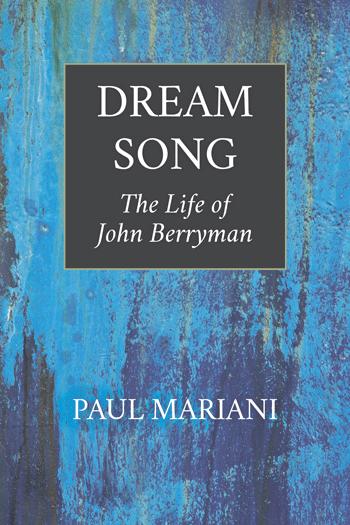
Dream Song: The Life of John Berryman by Paul Mariani


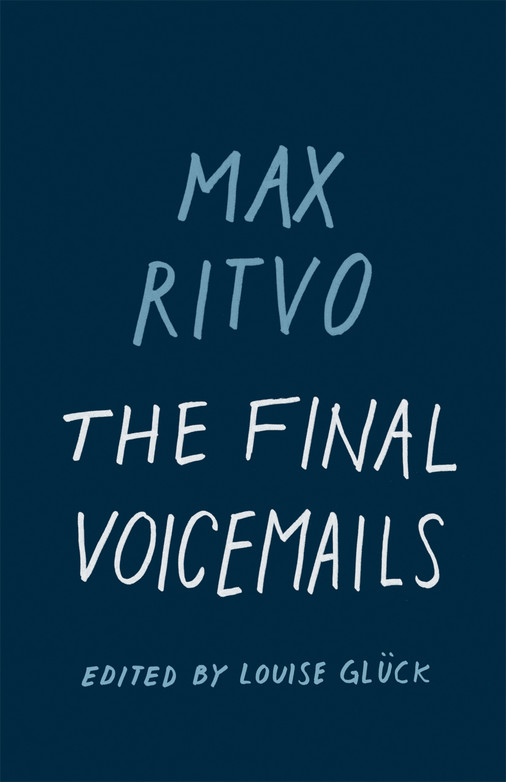
The Final Voicemails and Letters from Max by Max Ritvo

The LETTERS volume was something else, although I could have done with a little less Ruhl. 

I 'm struggling with the VOICEMAILS poems, though struck with lines all over the place.  Also take it personally that he was adopted so avidly by Louise Gluck and Sarah Ruhl, as a tragic Keatsian figure who was dying throughout his short writing career.

Saturday, September 15, 2018

The Life of John Berryman by John Haffenden

 They sell the reader short by trimming texture to a thesis. Haffenden on limitations of literary biography

The artist is extremely lucky who is presented with the worst possible ordeal which will not actually kill him. 

Berryman on Delmore Schwartz's praise of JB's poems: One word is worth it all.  The sick waiting, and letting the poems go out despised, the insufferable reviewers, the silence from whatever readers; the arrogance and the sick doubt; the terrible hours of probing as at a wound, looking, looking, for what may not be there; the conscience and the dry throat, the dry eyes; the piercing hope. 

Schwartz to Mark Van Doren on JB: for what he needs in the most obvious way is some kind of situation to cope with besides his own feelings.

I set up The Dream Songs as hostile to every visibile tendency in both American and English poetry -- in so far as the English have any poetry nowadays. The aim was the same in both poems: the reproduction or invention of the motions of a human personality, free and determined... Critics are divided as to the degree of my success in both cases. Long may they rave!

from the novel  Recovery:
On the rare occasions when he had ever applied for anything - Guggenheim and so forth - he sweated. It was beneath his dignity.  His position was: let the Universe collect & do his bidding without being asked.

Some of the best kind of writing is really transparent....The artist just says what he thinks, or says how he feels....The art comes just in placing, pure syntax.


Featured Post

Buy my books.

Buy the books on Amazon, and watch videos of some readings.   Please.