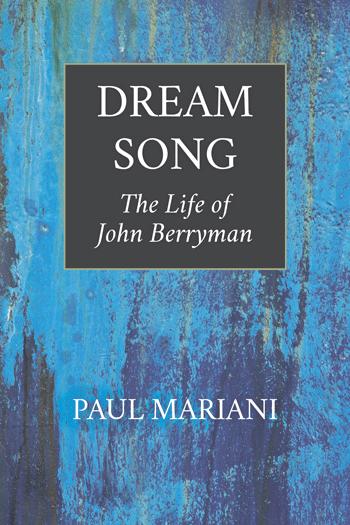
In justice to my father, one should note that he resorted to elaborate invention only after first experimenting with simple falsehood. Virgilia was a beautiful sin, and it is so easy to confess a beautiful sin!
Couldn't quite get this novel. Feels like a science fiction/dystopian exercise addressing the famines and failed social engineering experiments in China in the middle of the 20th century. A small village begins experiencing a wave of sleepwalking and mental disease.
One chilling note: the production, storage, and uses of "corpse oil," which is rendered by a family that runs the local crematorium, pressed from dead bodies before they are burned.
First novel, written while he was a graduate student. Re-reading it, I find it charming and breezy, compared to Infinite Jest and The Pale King. Still a handful of a novel, though. Many of the same elements -- the disturbed, brilliant, manic nuclear family, the meta-presence of philosophical theory as part of the plot, the post-modern experiments with narrative and dialogue.
A sprawling, beguiling, Borgesian exercise in literary history and narrative focus. Two poets, leaders of the so-called "visceral poetry" movement in Mexicon, dart in and out of a 600 page novel that features many dozens of "interview" with other poets and people whose lives intersected with the two poets.
Challenging! everything began to tangle in my head, as if the words I had to say were plants and all of a sudden they began to wither, fade, and die. when I was in high school we had a teacher who claimed to know exactly what he would do if World War III broke out: go back to his hometown, because nothing ever happened there, probably a joke, I don't know, but in a way he was right, when the whole civilized world disappears Mexico will keep existing, when the planet vaporizes or disintegrates, Mexico will still be Mexico. ... I could peel my hands off that glass of that old mirror (noticing, all the same, how my fingerprints lingered like ten tiny face speaking in unison and so quickly that I couldn't make out their words).
My sister Maureen gave me this book on Christmas in 1977 when she was a freshman at Fordham University and I was a junior in high school. I don't know if she'd read it - when I reminded her of the gift two weeks ago, she had no idea what I was talking about - or if, at the time, she'd read it was Bellow's impassioned extension of his friend with the great doomed poet Delmore Schwartz, and figured, since at age 16 I was talking great guns about becoming a poet, that it was a gift that would sit right with me. But I've just finished it for the first time, I will confess. Although I'm a Saul Bellow fan - his Adventures of Augie March certainly makes my top ten American Novels list, and I've read several others and fervently admire them for their intellect. And what a staggering book! Infuriating, too. He [H] said that history was a nightmare during which he was trying to get a good night's rest. Well, we woo one other with everything we've got. Look, professor, you don't mix things up. That's not what a wife is about. And if you have a funny foot you have to look for a funny shoe. And if you find the right fit you just let it alone. acts of exalted violence by dedicated ideologists to shock the bourgeoisie and regenerate its dying nerve. Blake was naked and saw man naked, and from the center of his own crystal. At the center of the beholder there must be space for the whole, and this nothing-space is not an empty nothing but a nothing reserved for everything 'Though you are said to be alive you are dead. Wake up and put some strength into what is left, which must otherwise die.' That's from the Revelation of Saint John, more or less. By means of music a man affirmed that the logically unanswerable was, in a different form, answerable. Sounds without determinate meaning become more and more pertinent, the greater the music. [Humboldt] "I ask myself why you figured so prominently in my obsessions and fixations. You may be one of those people who arouse family emotions, you're a son-and-brother type. Mind, you want to arouse feeling but not necessarily to return it. The idea is that the current should flow your way." [Humboldt] "Good old Henry James, of whom Mrs. Henry Adams said that he chewed more than he bit off..." [Humboldt quoting William Blake] "Fun I love, but too much fun is of all things the most loathsome. Mirth is better than fun, and happiness is better than mirth. I feel that a man may be happy in this world. And I know that this world is a world of imagination and vision. I see every thing I paint in this world, but everybody does not see alike. To the eyes of a miser a guinea is far more beautiful than the Sun, and a bag worn with the use of money has more beautiful proportions than a vine filled with grapes. The tree which moves some to tears of joy is in the eyes of others only a green thing which stands in the way. Some see nature all ridicule and deformity, and by these I shall not regulate my proportions; and some scarce see nature at all. But to the eyes of the man of imagination, nature is imagination itself. As a man is, so he sees."
Tremendously moving, tremendously informing. First one of Powers' novels that I've finish, and well worth it.
Not for the faint of heart. It is a BIG book, long and dense. There are two sides to the novel: there's a third person authorial voice that layers on incredible reams of facts about trees and plants and science, and then there are a handful of human characters who start out wholly separated and end up merging in radical protest against logging and commercial forces destroying the American forest.
The one problem for me is that the tree-speaking tends to dwarf the human speaking.
The humans move at lightning pace, compared to trees which have been around for thousands of years, in some cases.
A bit underwhelming. Haven't kept up with Lethem, but this is a sort of pale Pynchon-lite story. The female narrator's voice is unconvincing at best, and sappy at worst. the-day-after-trump-is-elected setting is invoked occasionally, but never means much.
Another winner from powerhouse Tana French. So much atmosphere, so little time! This time the setting is a posh girls school outside Dublin, and the murder on the grounds of a young man from a neighboring posh boys school. About adolescence, about femininity, about friend, but of course also about murder.
Another winner by Mina. Paddy Meehan, investigative reporter, comes of age. The "wee hen" gives better than she gets, and gets the story, and gets something else, as we learn in the cliff-hanging last sentence.
It's a shame Mina gets marketed as crime fiction -- she's a wonderful, close observer of character and class, with a sharp eye and tongue, this time setting down in 1984 Glasgow, with an Irish-Catholic take on the decline of the Scottish city.
Terrific predecessor to Boyne's 2017 stunner THE HEART'S INVISIBLE FURIES. This one takes on the scandal and coverup of Catholic clergy sexual abuse, but through the eyes of an "innocent" priest and the narrative of his family's life. Boyne is remarkably sensitive in painting a family, inside and out. The plot of who-touched-whom and who's-to-blame is good and holds one's interest, but it's the characters in the end who are indelible.
A dense, kaleidoscopic cultural history and biography of Franz Kafka, the final book in the three-volume series by Reiner Stach, but covering the early years, as legal hassling delayed Stach's work until a settlement was reached with Kafka (or Brod) estate on critical scholarly resources.
Kafka's surreal "otherworldly" style is seen hatching in turn of the century Prague, where, as a Jew, he struggled with linguistic, nationalistic and religious ghetto-ization as a native Czech.
I didn't know he was so fond of swimming, too.
Kafka's favorite painting on his first visit to Paris, a portrait of Voltaire still in his sleeping cap with his trousers only half-on.
The LETTERS volume was something else, although I could have done with a little less Ruhl.
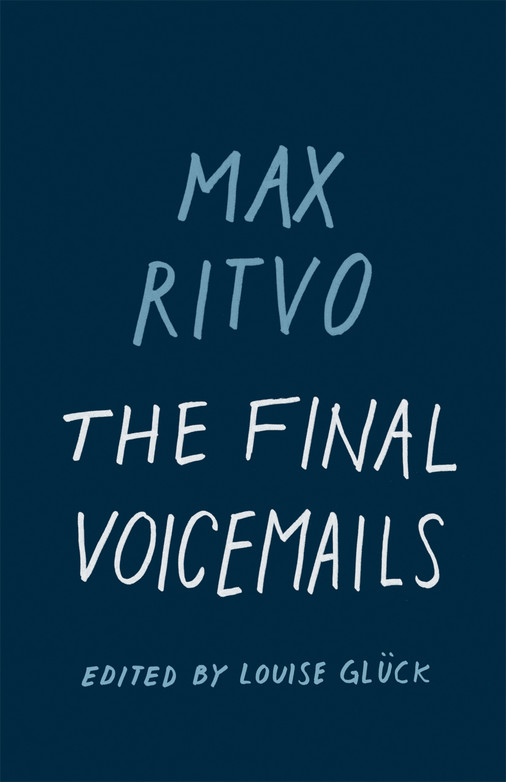
I 'm struggling with the VOICEMAILS poems, though struck with lines all over the place. Also take it personally that he was adopted so avidly by Louise Gluck and Sarah Ruhl, as a tragic Keatsian figure who was dying throughout his short writing career.
Hypnotically simple, subtle story of a 37-year old man with mental issues who lives with his spinster older sister on the edge of a lake in Norway. She knits sweaters to earn their keep and he does nothing, at first. The novel's point of view is entirely his, Mattis', and though he is intellectually challenged, the moral acuity of his emotional intelligence is breath-taking. He ends up becoming a "ferryman" as much in his own imagination as in the real world -- his one ferrying job brings a lumberjack to the isolated cabin Mattis lives in with his sister Hege, and Hege and the lumberjack become lovers, creating an insoluble difficulty in Mattis' deceptively simple existence.
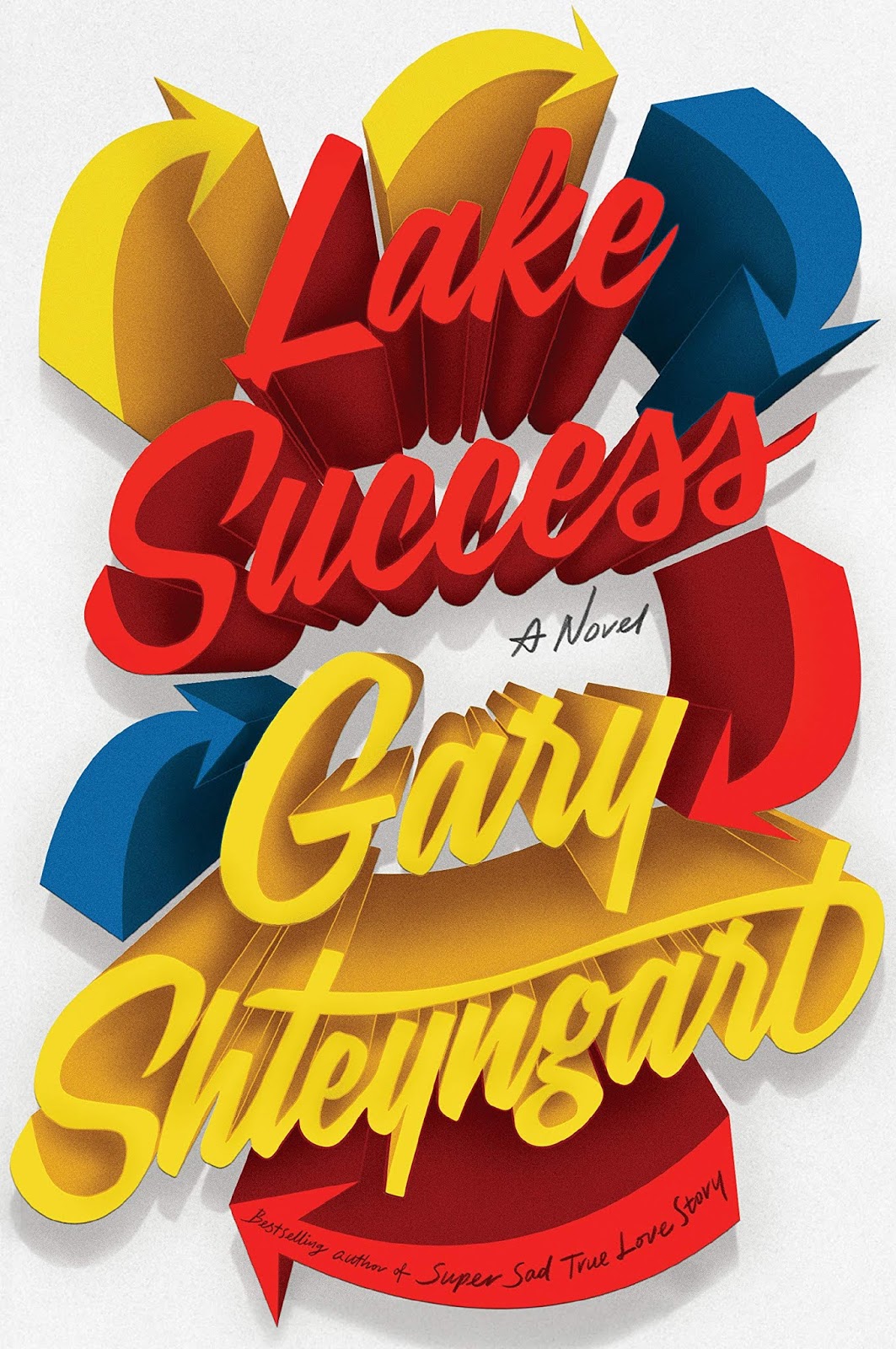
started weakly but I grew to like it. much more somber book from him. a lot of talk about expensive watches.
from Dwight Garner's NYT review: [GS] is is light, stinging, insolent and melancholy, to borrow the words the critic Kenneth Tynan kept on his writing desk to remind himself how to sound.