
Tuesday, September 03, 2019
The Perfect Wife by JP Delaney


Monday, August 26, 2019
Beloved by Toni Morrison

Tuesday, August 13, 2019
Song of Solomon by Toni Morrison

He became a plain on which, like the other cowboys and Indians in the movies, she and her husband fought. Each one befuddled by the values of the other. Each one convinced of his own purity and outraged by the idiocy he saw in the other.She was the Indian, of course, and lost her land, her customs, her integrity to the cowboy and became a spread-eagled footstool resigned to her fate and holding fast to tiny irrelevant defiances.
Guitar on FDR and white people: "What I’m saying is, under certain conditions they would all do it. And under the same circumstances we would not. So it doesn’t matter that some of them haven’t done it. I listen. I read. And now I know that they know it too. They know they are unnatural. Their writers and artists have been saying it for years. Telling them they are unnatural, telling them they are depraved. They call it tragedy. In the movies they call it adventure. It’s just depravity that they try to make glorious, natural. But it ain’t. The disease they have is in their blood, in the structure of their chromosomes."
People behaved much better, were more polite, more understanding when Milkman was drunk. The alcohol didn’t change him at all, but it had a tremendous impact on whomever he saw while he was under its influence. They looked better, never spoke above a whisper, and when they touched him, even to throw him out of the house party because he had peed in the kitchen sink, or when they picked his pockets as he dozed on a bench at the bus station, they were gentle, loving.
Apparently he thought he deserved only to be loved--from a distance, though--and given what he wanted. And in return he would be . . . what? Pleasant? Generous? Maybe all he was really saying was: I am not responsible for your pain; share your happiness with me but not your unhappiness.
Thursday, August 08, 2019

Tuesday, August 06, 2019
Up Against It: A Screenplay for the Beatles by Joe Orton

Wednesday, July 31, 2019
"Do Nothing Marvell Would Not Do": Remembering Professor Mary Kinzie

[In May of 2019, I was thrilled when my friend and Northwestern University Department of English Senior Lecturer Brian Bouldrey contacted me to ask if I would write a short memoir about studying poetry with Professor Mary Kinzie, who would retire that month.]
In 1980, almost 40 years ago, I studied with Mary Kinzie for
two short years. But her effect on my life and my writing has been astounding,
though: she asked the right questions of me, and challenged me, and pointed me
toward many poems and poets who have been right here with me almost every day
since then.
When we read Elizabeth Bishop, I transcribed inside the
cover of my The Complete Poems Mary’s suggestions for what to keep in
mind: Note her use of the conjunction
“and”; how she immediately establishes a
visible landscape and is extremely descriptive, but how her outrageous images
are meant to help readers, not to show off; how she absolutely finishes a
thought; her “refusal of the literary”; how she uses repetition to glue herself
to an idea; her childishness, her self-correcting style, her good manners.
The seeds she planted in me grew up – she might be appalled at
how the plant has tilted, and some of the colors and shapes it has taken on –
but I consider her the monumental mover of my mind during my undergraduate
years.
I was attracted to form but at 19 years old was a firm
communicant in the Church of the Romantic Ejaculate – my writing was holy, and
the poem as first-struck was a sacred relic and to be preserved as such. Mary
taught me how form flexed but must be cared for; to revise with intent; to
change what the draft poem was not, in
most cases, in my eager and largely dreadful work; to finish a thought or moment
or abandon it; to be deadly efficient and finely honest.
She was stern and brilliant and methodical, but also had a
pungent, memorable wit, particularly in her written comments: I remember from
her daily poems assignment list for three Marvellian-tetrameter stanzas:
“Formally, do nothing Marvell would not do.” “The danger of alliteration,
according to Gross, is ‘consonantal clang.’” Her note on my Auden imitation
was, “You’ll have to have a clearer plot (i.e., mythology) and an array of
details more telling (and more easy to stick into an iambic pentameter line)
than a DISHWASHER.”
But she taught me to expect more of myself, as she always
did: she noted on my journal entry on a Yeats poem, “You should be cross with
yourself over this irrelevant entry.”
I determined to do everything she said to do, even if I
couldn’t understand very much of it. It was like learning a tricky piano piece:
you just kept going through it again and again, and note by chord by bar, it improved,
and your hands warmed to the pleasure of your ears hearing the code in front of
you begin approach the sound you wanted.
After I left Northwestern, I continued to pay attention to
Mary: via her volumes of poetry, her reviews in APR, and eventually in her collected
criticism and essays, her epic A Poet’s Guide to Poetry. In the back of Summers of Vietnam I
scrawled the words I had never heard before: tarn, fardels, chitin, faience, morrices, tmesis, clerestory, colfox,
cok brake, calor, ghostwheat. She refused to stop teaching me, from a
distance.
I watched her own formalism retreat over time, but the poems
expand and astonish me with their emotional and narrative effect. “Reading an
Old Poem of Mine” and “Lunar Eclipse”– I almost memorized them. Again, it was
mostly beyond me, but I kept writing, thinking, reading:
I tear back all I know till I don't know it,
and I can see the jagged
flicker at the core
prior to understanding,
tearing thought down into pieces
that sit about oddly under a different light,
strange, hard, anonymous.
(from “Lunar
Frost” by Mary Kinzie)
At the same time, I partly blame Mary’s rigor for driving me
away from anything to do with academic study. My lazy soul took ten years to go
back and get my MFA. During that time, something loosened in me, in reaction to
Mary’s exercises: my mind was suddenly brimming with unassigned poems. But even
as I started drifting from formal verse, something had also tightened: there was
always a formidable ghost of form.
And my very first published poem in 1988 was a revision of a
daily poem syllabics assignment– in 1981 Mary had noted, “This is close to
being a perfectly realized poem.” She wanted more in the middle of the poem and
a new title – it took me eight years to add two lines and change the title. True
to me, it’s about a lazy soul, but true to Mary, it’s well-wrought.
Progressions
Outside the window it is evening.
Since morning I’ve watched the shadows change
From pointing this way to pointing that,
Combing the tall lime grass of the lawn.
It now glows dark olive, still uncut.
I’ve planned all day long what I would do
All day long, so haven’t done a thing.
The temptation to move slides further
Away even as I reach for it.
Perhaps today was not meant for acts
But for the gradual notation
Of shadows that will never return—
Not exactly, at least, as before.
New Age Magazine was pleased to have it, and I hoped they moved plenty o’ vitamins and healing stones as a result. They’d never know how hard it was to write – and how much of what Mary Kinzie taught me in class still clanged clear across the years since I’d seen her. And continues to. Thank you, Mary! And enjoy your redeployment.
The Man with the Golden Arm by Nelson Algren
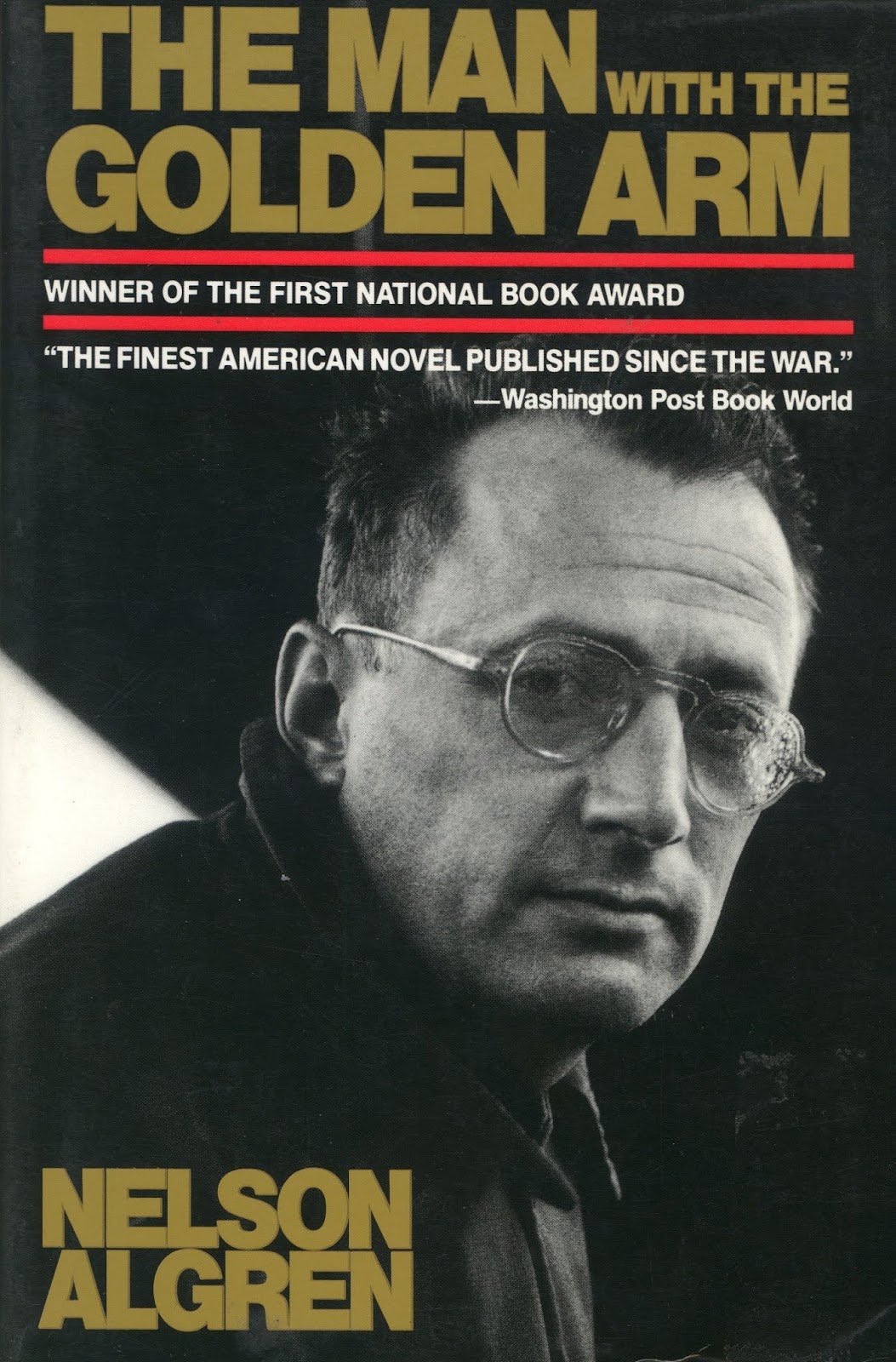
He looked like a man who had never seen a cloud. (72)
Sophie: If I get any luckier I'll be the luckiest woman in the cemetery. (73)
He was too dear to her: into everything he did she must read some secret hatred of herself. (82)
Violet: Lies are just a poor man's pennies. (84)
Violet: So it was up to me to show him he was somebody all by hisself-- that's the first thing a woman got to do for a man. 'N of course there's no sense tryin' to prove somethin' like that standin' up. The least a girl owes herself is to be compfortable about it. (85)


Monday, July 29, 2019

Thursday, July 25, 2019
Country Girl by Edna O'Briend

She knew everybody, she did everything, she wrote about most of it.
Feminist, risk-taker, rule-breaker. Barhopping with Brando and Mailer, dropping acid with Laing.
Wednesday, July 24, 2019
Conviction by Denise Mina

Monday, July 22, 2019
Never a Lovely So Real: The Life and Work of Nelson Algren by Colin Asher

On bullfighting: “It’s always a shutout for the bull.”
We are all members of one another. Algren, The Man With The Golden Gun
From his 1957 essay “Ain’t Nobody on My Side?”:
Surely never before has any people lived so tidily in the midst of such psychological disorder. Never has any people deodorized, sanitized, germproofed, cellophaned and hygienized itself so thoroughly, and still remained stuck with the sense of something dead under the house. Never have so many two-baths-a-day people gone to so many analysts to find out how to quit washing their hands. Never have so many analysts made appointments with other analysts. How can we be so satisfied that God is on our side, and at the same time be so apprehensive lest he be not?
No other people, I suspect, has set itself a moral code so rigid, while applying it so flexibly. Surely nowhere before has any people possessed such a superfluity of physical luxuries companioned by such a dearth of emotional necessities. Never has any people been so completely at the mercy of its own appliances.
Tuesday, July 09, 2019

Tuesday, June 25, 2019
Big Bang by David Bowman

These charcters include JFK and Jackie Kennedy, Aristole Onasis and Jackie's sister, Richard Nixon, the Vietnamese political and military leadership, Howard Hunt, the erstwhile CIA misadventur who eventually bumbled into Watergate, authors like William Burroughs, Norman Mailer, Allen Ginsberg, Arthur Miller and his wife Marilyn Monroe, noted baby doctor and author Benjamin Spock and his wife, TV personality Ed Sullivan. And literally dozens more.
He builds richly detailed personal lives for all these historical characters. Some of it sounds like it's actually historically true, but this seems to become less and less important the more richly detailed the interior lives become.
Tuesday, June 18, 2019

Thursday, June 13, 2019


Wednesday, June 12, 2019
Disappearing Earth by Julia Phillips

two girls go missing in the first chapter, and we don't see or hear from them until the final chapter. in between, over the course of the year, we do submerge deeply into lives of a dozen or so residents whose lives have been touched by the girls' disappearance in small and larger ways. the isolation, the hopelessness, the hope, the national and ethnic frustrations of these people are bracingly delivered by Julia Phillips piercing, empathetic prose.
Recommended.
Wednesday, June 05, 2019
Machines Like Me by Ian McEwan

hard to put down. some of the plot machinations seems a bit facile and quickly-established, and I could do without McEwan's constant interlude marker ("and then we made love") but hard to argue with a novel that does so much in so little space.
Tuesday, May 28, 2019

Tuesday, May 14, 2019
Bowlaway by Elizabeth McCracken
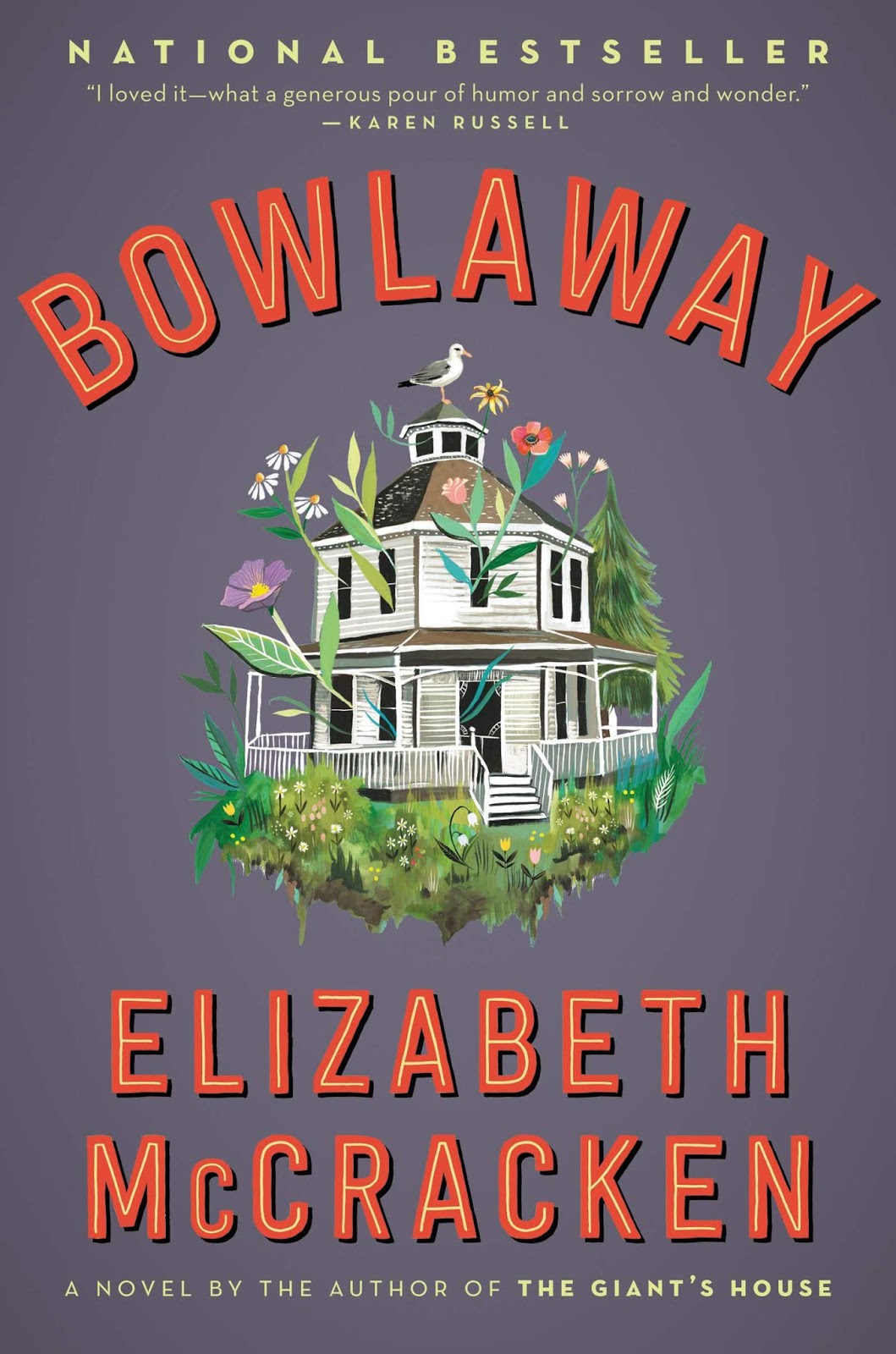
A woman found sleeping in a Massachusetts graveyard establishes a candlestick bowling alley that is later determined to be inhabited by ghosts, both real and literary.
Proof of God? Proof was in the world, and the way you visited the world was on foot... Your walking was a devotion. (44)
LuEtta had recently decided she would be a wonder instead of a beauty. She had seen beauties go mad in middle age, as their beauty turned less live and more monumental, beauty still but mostly to mark the space where greater beauty once had been. But wondrous was wondrous, even when you outgrew it.

Monday, May 06, 2019

Ill Will by Dan Chaon

Wednesday, April 24, 2019


Monday, April 08, 2019

Epitaph of a Small Winner by Machado de Assis

Virgilia was a beautiful sin, and it is so easy to confess a beautiful sin!
Monday, April 01, 2019


Wednesday, March 27, 2019

Tuesday, March 12, 2019
The Day the Sun Died by Yan Lianke

One chilling note: the production, storage, and uses of "corpse oil," which is rendered by a family that runs the local crematorium, pressed from dead bodies before they are burned.
The Broom of the System by David Foster Wallace

Thursday, February 28, 2019


Saturday, February 16, 2019
Homesick for Another World by Ottessa Moshfegh

The Savage Detectives by Roberto Bolano

Challenging!
everything began to tangle in my head, as if the words I had to say were plants and all of a sudden they began to wither, fade, and die.
when I was in high school we had a teacher who claimed to know exactly what he would do if World War III broke out: go back to his hometown, because nothing ever happened there, probably a joke, I don't know, but in a way he was right, when the whole civilized world disappears Mexico will keep existing, when the planet vaporizes or disintegrates, Mexico will still be Mexico.
... I could peel my hands off that glass of that old mirror (noticing, all the same, how my fingerprints lingered like ten tiny face speaking in unison and so quickly that I couldn't make out their words).
Monday, February 11, 2019
Humboldt's Gift by Saul Bellow

My sister Maureen gave me this book on Christmas in 1977 when she was a freshman at Fordham University and I was a junior in high school. I don't know if she'd read it - when I reminded her of the gift two weeks ago, she had no idea what I was talking about - or if, at the time, she'd read it was Bellow's impassioned extension of his friend with the great doomed poet Delmore Schwartz, and figured, since at age 16 I was talking great guns about becoming a poet, that it was a gift that would sit right with me.
But I've just finished it for the first time, I will confess. Although I'm a Saul Bellow fan - his Adventures of Augie March certainly makes my top ten American Novels list, and I've read several others and fervently admire them for their intellect.
And what a staggering book! Infuriating, too.
He [H] said that history was a nightmare during which he was trying to get a good night's rest.
Well, we woo one other with everything we've got.
Look, professor, you don't mix things up. That's not what a wife is about. And if you have a funny foot you have to look for a funny shoe. And if you find the right fit you just let it alone.
acts of exalted violence by dedicated ideologists to shock the bourgeoisie and regenerate its dying nerve.
Blake was naked and saw man naked, and from the center of his own crystal.
At the center of the beholder there must be space for the whole, and this nothing-space is not an empty nothing but a nothing reserved for everything
'Though you are said to be alive you are dead. Wake up and put some strength into what is left, which must otherwise die.' That's from the Revelation of Saint John, more or less.
By means of music a man affirmed that the logically unanswerable was, in a different form, answerable. Sounds without determinate meaning become more and more pertinent, the greater the music.
[Humboldt] "I ask myself why you figured so prominently in my obsessions and fixations. You may be one of those people who arouse family emotions, you're a son-and-brother type. Mind, you want to arouse feeling but not necessarily to return it. The idea is that the current should flow your way."
[Humboldt] "Good old Henry James, of whom Mrs. Henry Adams said that he chewed more than he bit off..."
[Humboldt quoting William Blake] "Fun I love, but too much fun is of all things the most loathsome. Mirth is better than fun, and happiness is better than mirth. I feel that a man may be happy in this world. And I know that this world is a world of imagination and vision. I see every thing I paint in this world, but everybody does not see alike. To the eyes of a miser a guinea is far more beautiful than the Sun, and a bag worn with the use of money has more beautiful proportions than a vine filled with grapes. The tree which moves some to tears of joy is in the eyes of others only a green thing which stands in the way. Some see nature all ridicule and deformity, and by these I shall not regulate my proportions; and some scarce see nature at all. But to the eyes of the man of imagination, nature is imagination itself. As a man is, so he sees."
Thursday, January 31, 2019

Tuesday, January 29, 2019

All the Light We Cannot See by Anthony Doerr

Monday, January 21, 2019


Thursday, January 17, 2019

Tuesday, January 08, 2019


Subscribe to:
Posts (Atom)
-
 My son and I saw THE HIDDEN FORTRESS at AFI Silver yesterday afternoon, what a masterpiece! The 21-year old Misa Uehara as the Princess was ...
 -
 May he have an accident shaped like an umbrella. [p. 13] Finally reading this after owning it for almost 40 years. Collection of short ...
