
Thursday, June 20, 2013
Last Friends by Jane Gardam


Saturday, June 15, 2013

Wednesday, June 12, 2013

Stoner by John Williams

Beautiful, tender quiet masterpiece about a poor farm boy who falls in love with literature and works his entire life in obscurity teaching at a Midwestern university.
Wednesday, June 05, 2013
Midnight's Children by Salman Rushdie

An overwhelming book. This time around, it seemed clear to me that Rushie had The Tin Drum in mind as a model for the book -- a personal history of a precocious (and damaged child) whose birth, life and conflicts cunningly mirror his country's fortunes.
Sunday, May 26, 2013

Thursday, May 16, 2013

Monday, May 06, 2013

Monday, April 29, 2013



Thursday, April 18, 2013


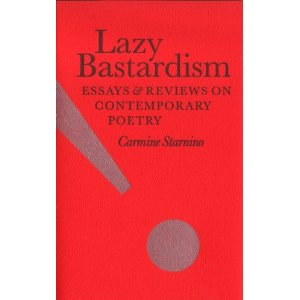
Legitimate Dangers: American Poets of the New Century

The Beats: A Graphic History

Friday, April 12, 2013
The Finkler Question by Howard Jacobson

First extended Kindle experience. Did not enjoy it.
Coincidence?
Like Philip Roth without pleasure.
Wednesday, March 27, 2013

Thursday, March 21, 2013
A Sport and a Pasttime by James Salter

Begs re-reading, like any good poem, since I had that rushed feeling reading it (like poetry) that only halfway through was I truly begin to understand it narratively, and so need to go back and revisit both the heightened language, the emotional tone, and the plot of it all.
Singular. Nabokov crossed with John O'Hare. France seems an infinitely enchanted and endless place.
Tuesday, March 19, 2013

Saturday, March 16, 2013
Slapstick by Kurt Vonnegut
.jpg)
Missed nothing. A terrifically slight book, I thought. Read it in about two hours, felt almost nothing.
Thursday, February 28, 2013
The Yellow Birds by Kevin Powers

The rest is history, they say. Bullshit, I say. It's imagination or it's nothing, and must be, because what is created in this world, or made, can be undone, unmade; the threads of a rope can be unwoven. And if that rope is needed as a guideline for a ferry to a farther shore, then one must invent a way to weave it back, or there will be drownings in the streams that cross our paths. I accept now, though in truth it took some time, that must must be its own permission.
This sort of consciousness, a voice searching for moral reason and ethical sense and metaphysical reassurance, is dense on every single page of the novel. And at the same time, constantly present in his prose, beautiful, vivid, haunting concrete physical description of two worlds -- Iraq, and rural southern Virginia -- that never ever meet and yet somehow, in Power's vision, are fused, confused, refused, and unresolved.
Subscribe to:
Posts (Atom)
-
 My son and I saw THE HIDDEN FORTRESS at AFI Silver yesterday afternoon, what a masterpiece! The 21-year old Misa Uehara as the Princess was ...
 -
 May he have an accident shaped like an umbrella. [p. 13] Finally reading this after owning it for almost 40 years. Collection of short ...
