Tuesday, October 12, 2021

Sabbath's Theater by Philip Roth

Loved this first time I read it, when it came out in 1994. First Roth (along with American Pastoral) that I felt was really had serious scope, family history, character depth. Also enjoyed is this time around, but the sex continues cringey.

The mad puppeteer Micky Sabbath loses his shit. In swirling flashbacks he relates his several wives, his stunted 1960s career as an obscure genius actor and performer, then pushes back to his childhood in the 30s and 40s in Jersey and the pivotal, inescapable loss of his brother Mortie in WWII.

When We Cease To Understand the World by Benjamin Labatut


Wednesday, September 22, 2021

Harpo Speaks! by Harpo Marx


Ohio by Stephen Markley


Great, thoughtful novel: high school reunions and the effect of the Iraq War on America in the early 21st century.

While hollering and breathing so long so deep
Memory came on and dove down to my sleep 
Dreaming this memory of space all around
Silence becomes breath becomes thought becomes sound.
John Hardee

He thought of the sudden pressure in his eardrums when the bomb went off beneath the wheels. The screaming pain in his skull and how the world abruptly went half-dark. Three tours. He gave his youth to the dust of those theaters. An eye, some skin, blood, and hair, and his ability to walk more than a few miles without a crippling pain in his knees and an ache in his spine that made him feel seventy years old. On tour #3, the day before the incident on Highway 1, he was reading about Ohio’s place in the Civil War and came across a quote about a Union general: At the sight of these dead men whom other men had killed, something went out of him, the habit of a lifetime, that never came back again: the sense of the sacredness of life and the impossibility of destroying it.

 Then you get tired and lie down and wait for the medevac. A part of you is sickly impressed with how the enemy orchestrated all this. They got you good this time. You figure your life is over, but the investigation will clear you easily. You saw a threat in the cell phone boy and removed it from your section. The bullet Rudy took to the head—a 5.56mm piece of U.S. hardware—it turns out that came from extra ammo carelessly left in the rear cooking off in the heat. And lying there in the dust, head buzzing from the burning fuel, the wind smoldering with black smoke and ash trailing to a seared pink twilight sky, you understand that something’s gone out of you, the habit of your lifetime. Any notion of the sacredness of life or the impossibility of destroying it. You go over to what’s left of your friend, sit down, bleed from your face, and wait for some rescue. [p. 358]

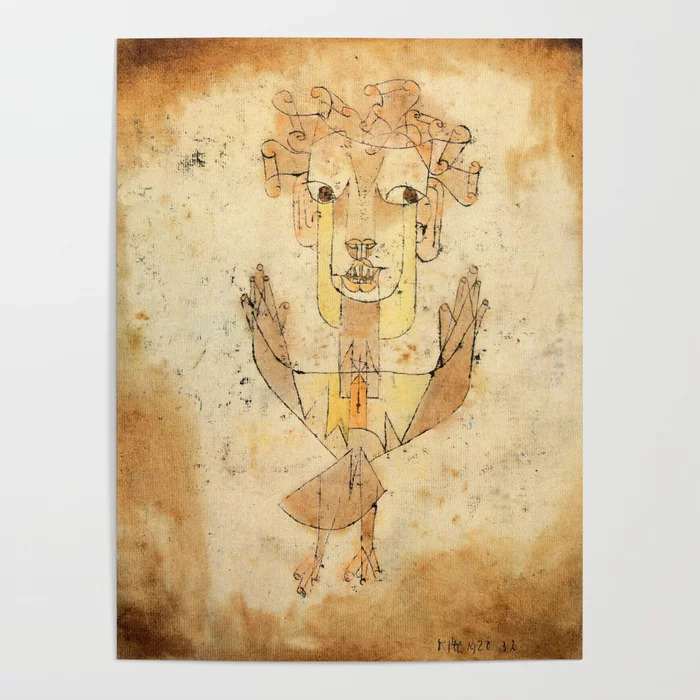
Source: Theses on the Philosophy of History (1940), IX Context: A Klee painting named ‘Angelus Novus’ shows an angel looking as though he is about to move away from something he is fixedly contemplating. His eyes are staring, his mouth is open, his wings are spread. This is how one pictures the angel of history. His face is turned toward the past. Where we perceive a chain of events, he sees one single catastrophe which keeps piling wreckage upon wreckage and hurls it in front of his feet. The angel would like to stay, awaken the dead, and make whole what has been smashed. But a storm is blowing in from Paradise; it has got caught in his wings with such violence that the angel can no longer close them. This storm irresistibly propels him into the future to which his back is turned, while the pile of debris before him grows skyward. This storm is what we call progress.

Source: https://quotepark.com/quotes/1938988-walter-benjamin-this-storm-is-what-we-call-progress/


Paul Klee "Angelus Novus 1920" Poster


Thursday, September 09, 2021

Thirst for Love by Yukio Mishima

To me this is a false diary, although no human being can be so honest as to become completely false. (p.17)

Tuesday, September 07, 2021

The Humbling by Philip Roth


Interesting start, describing a distinguished actor in his 60s who loses the ability to act. Sort of devolves into a pervy Roth sex fantasy though. Not that that stopped me from finishing it. Movie with Al Pacino supposed to be good, looking forward to watching it.

Monday, August 23, 2021

Who is Maud Dixon? by Alexandra Andrews

 Pretty good literary whodunit. Along the lines of THE PLOT.


The Five Wounds by Kirstin Valdez Quade


Really great, surprisingly moving story of a family in New Mexico: grandmother dying of a brain tumor that no one else knows about, singe unemployed alcoholic father trying to get it together (plays Jesus in Passion play at local morales, has actual nails hammered into his palms), his sixteen year old pregnant daughter trying to get her life together. Very fine, close writing.

Homeland Elegies by Ayad Akhtar


good, strange mix of fiction and memoir.

Sunday, July 25, 2021

Lady in the Lake by Laura Lippman

Loved this. First of Lippman I've read, will seek out others. 1960s Baltimore, a 36 year old Jewish woman leaves her husband and seeks a career as a crime reporter, stumbling over clues to an  African-American woman's crucial unsolved murder.

Wednesday, July 14, 2021

Monday, July 12, 2021

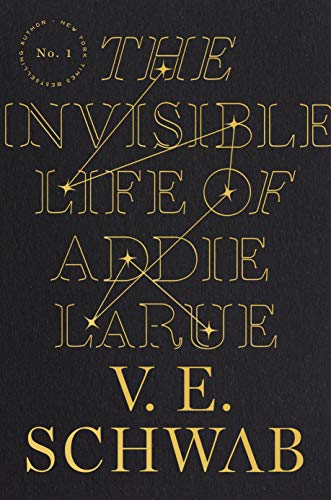
The Invisible Live of Addie LaRue by V. E. Schwab


Interesting concept but her exhaustiing prose is super-stuffed with melodrama. And I LIKE melodrama, but not to drown in it. At the critical juncture of page 60, but may not continue.

Bullet Park by John Cheever


JC has said of Bullet Park, "I'd like to write a gothic novel without being caught in the act."

I loved this one, even though the final 10 pages or so are ridiculously fast-paced, after a completely langorous setup.

Some reactions: 

Granted, Bullet Park is a strange performance, and it was a bad sign that even reviewers who were nothing but well disposed to Cheever seemed a little puzzled. A few months before her review appeared in the Washington Post Book World, Joyce Carol Oates had been quoted as saying that she was Updike's and Cheever's “ideal reader” (“whatever they write I read immediately, and I read it again two or three times”), so it made sense perhaps that she and Updike were en rapport in regard to Bullet Park: neither thought the book amounted to a novel, properly speaking, but rather that it worked (as Updike wrote in the London Times) “as a slowly revolving mobile of marvellously poeticized moments,” or, as Oates put it, “a series of eerie, sometimes beautiful, sometimes
overwrought vignettes.” Oates knew better than to worry whether the plot was “convincing” or not, pointing out that Cheever was if anything bent on making his plot as outlandish as possible; and yet, for all the novel's seeming absurdity, said Oates, it conveyed a sense of “terror … as deadly, more deadly, than any promised in the glib new genre of ‘black comedy’ Cheever has been writing such comedy for decades.” John Leonard, whose review appeared in the daily New York Times, also realized that conventional narrative was beside the point, and praised the novel as Cheever's “deepest, most challenging book.” And finally a synthesis of sorts was found in Anatole
Broyard's New Republic review, which suggested that the book was a little too fraught with oddities, that Cheever had apparently gotten carried away by his own virtuosity: “He is determined to be surprising or original, even at the cost of incredulity.” [p. 209, Bailey, CHEEVER: A LIFE]

John Gardner wrote a long vindication of the novel for the Times Book Review, declaring that its detractors had been “dead wrong”: “Bullet Park is a novel to pore over, move around in, live with. The image repetitions, the stark and subtle correspondences that create the book's ambiguous meaning, its uneasy courage and compassion, sink in and in, like a curative spell.” [p. 212, Bailey, CHEEVER: A LIFE]

Wednesday, July 07, 2021

Tuesday, July 06, 2021

Home Before Dark by Susan Cheever


Interesting companion book along with John Cheever's own fiction in journals. SC is a bit of a poseur, but she quotes eloquently from her father's writing and from what others wrote about him.

"He was a man who made his own world in relative isolation from most of his kind,"  my brother Fred wrote when I asked him to put down what he remembered about our father. "As a result he had to live with his own impulses and perceptions in ways that most of us can avoid. No one, absolutely no one shared his life with him. There was no one from whom he could get honest advice. Of course this state of affairs was very much his own doing, but it must have been hard sometimes." (p. 154-155)

'My incantation has changed,'' he wrote in 1969 after ''Bullet Park'' had been panned by the critics and his alcoholism was worse and most of the money was spent. ''I am no longer sitting under an apple tree in clean chinos reading. I am sitting naked in the yellow chair in the dining room. In my hand there is a large crystal glass filled to the brim with honey colored whiskey. There are two ice cubes in the whiskey. I am smoking six or seven cigarettes and thinking contentedly about my interesting travels in Egypt and Russia. When the glass is empty I fill it again with ice and whiskey and light another cigarette although there are several burning in the ashtray. I am sitting naked in a yellow chair drinking whiskey and smoking six or seven cigarettes.'' (p. 155)

If He Hollers Let Him Go by Chester Himes


Brutal brief book. Four days in the life of a blue-collar black man in LA during WWII. Angry, intelligent, heart-rending.

But the words kept on in my mind. I got a hard, grinding nonchalance. To hell with everybody, I thought. To hell with the world; if there were any more little worlds, to hell with them too.

Wednesday, June 30, 2021

Falconer by John Cheever


I swear I read this when it was published with great fanfare in 1977 and I was sixteen years old. Hipster. Scenester. Had I a clue about what it was? Doubt it. I remember admiring it. Or perhaps admiring myself for finishing it.

Featured Post

Buy my books.

Buy the books on Amazon, and watch videos of some readings.   Please.