Wednesday, October 05, 2022

Mercury Pictures Presents by Anthony Marra


Well, it seemed to go on forever, but I got through it. Terribly overwritten, in my opinion, not just in the prose but in the jarring shifting points-of-view and flashback/forwards. I thought A CONSTELLATION OF VITAL PHENOMENON was so tremendous that I opened this novel with trembling hands. He's gifted - and the story was intriguing and intricate - but the structure was not great. Reading CHRIST STOPPED AT EBOLI at the same time - one of the many texts Marra acknowledges in his afterword - couldn't have helped, as EBOLI is a masterpiece of concision and beauty.

Mount Chicago by Adam Levin


Extraordinary, and extraordinarily weird, story. Funny and sad. And weird. Levin riffs and raffs hilariously. It's a book about his mind more than it is about Chicago. But marvelous.

The consciousness and point of view of Gladman's parrot Gogol were particularly outstanding. Everything you wanted to know -- and much much more --about parrot sexual reproduction is explained [362-363].

That there were basically only two things to fear: flocklessness and death. [247]

Penguins having oral sex: cloachalingus.

Monday, August 22, 2022

Mr. President by Miguel Angel Asturias


Astonishing hidden-Modernist novel written in the 1920s by the Guatemalan Miguel Angel Asturias, but only published after political exile in 1946. One of those books that might have made a different historically had it been published in its own time.

Cesaire described Asturias as "a mountain perennially green, on the horizon of all mankind. [xiv]

The prisoners continued walking by. To be them, and not to be the onlookers so happy not to be prisoners. [xxix]

"I'm the Apple-Rose of the Bird of Paradise, I'm life, and half my body is a lie, the other half truth... I am the lie in every truth, the truth of all fiction.' [19]

"You'll either die or go blind reading." [17]

"Sir, he couldn't bear the two hundred lashes because he died first. "[30]

She took comfort in remembering her son. She imagined him still in her womb. Mothers never completely empty of their children. [102]

When fingers tremble bonelessly, hands shake like gloves. When jaws tremble, unable to speak, they telegraph worry. When legs tremble, someone is standing up in a carriage harnessed to two runaway horses like souls the Devil is about to usurp. [108-109\]

"Love, my girl, is a cherry snow cone. When you start eating, there's tons of red syrup and you're happy. Then it drips all over and you've got to lick it before the top tips over. Then you're left with a tasteless, colorless clump of ice." [112]

You would fit perfectly
In the keyhole of heaven:
The locksmith carved your body
On a star, on the day you were born. [115]

Christ Stopped at Eboli by Carlo Levi


Where do I start about this remarkable book? A political prisoner in Italy, a doctor and painter, in 1942-1943 is sentenced/banished by the fascist Mussolini regime to a remote peasant region in the southern part of the country. Whereupon he makes notes for an anthropological, social history of the region and its people. The peasants' superstitions and conduct are vividly conjured.

"We're not Christians," they say. "Christ stopped sort of here, at Eboli." "Christian," in their way of speaking means "human beings." and this almost proverbial phrase that I have so often heard them repeat may be no more than the expression of a hopeless feeling of inferiority. We're not Christians, we're not human beings; we're not thought of as men but simply as beasts, beasts of burden, or even less than beasts, mere creatures of the wild. (p. 3)

tax collector who is also a clarinetist (35)

disgraced priest (40-41)

The mayor and schoolmaster was at this moment exercising his teaching function. He was sitting on a balcony just off the classroom and having a smoke while he looked at the people in this square below... He had a long cane in his hand, and, without moving from his chair, he restored order within by striking through the window with astonishing accuracy... (44-5)

public latrine built by fascists - no function (46)

man who inflates dead goats to strip the skin and make flasks of it (46-7

drawing room cut up into dark prison cells (50)

two political prisoners who take turns cooking lunch for each, and setting it out - but who are not allowed to see each other and fraternize (51-2)

He was on obese, heavy, deaf old man, greedy and grasping like an enormous silk-worm. (59)

the peasants relationship to the state (76-78)

shitting outside (96)

Giulia physical description: Her face as a whole had a strongly archaic character, not classical in Greek or Roman sense, but stemming from an antiquity more mysterious and more cruel which had sprung always from the same ground, and which was unrelated to man, but linked with the soil and its everlasting animal deities. (105)

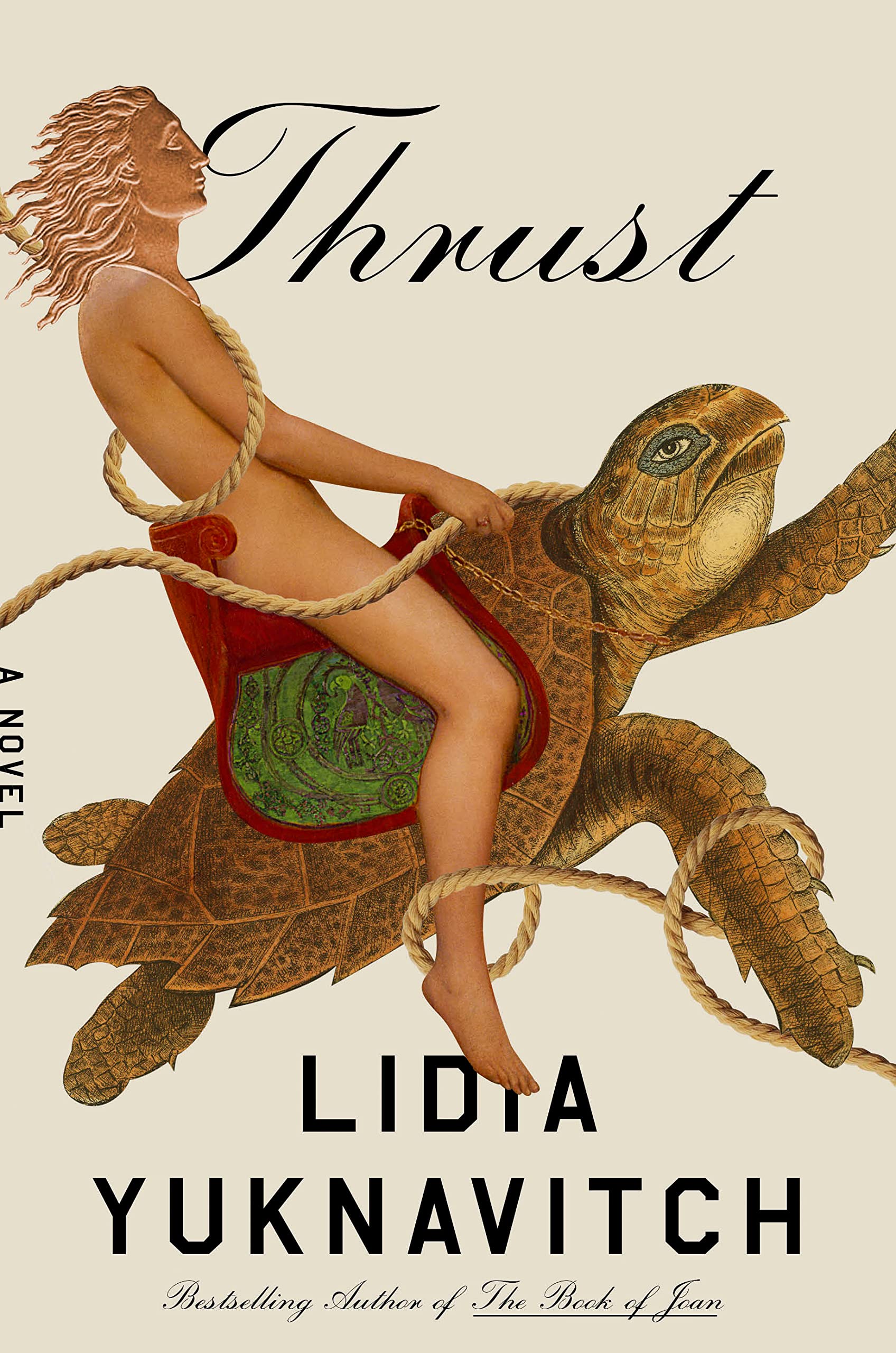
Thrust by Lidia Yuknavitch


Saturday, August 13, 2022

Tuesday, August 02, 2022

The Candy House by Jennifer Egan


Meh. Apparently there are recurring characters from GOON SQUAD, but I don't remember it clearly enough for continuity. Some interesting stuff but thought the second half trailed off instead of building up to something.

Thursday, July 28, 2022

A Wrinkle in Time by Madeleine L'Engle


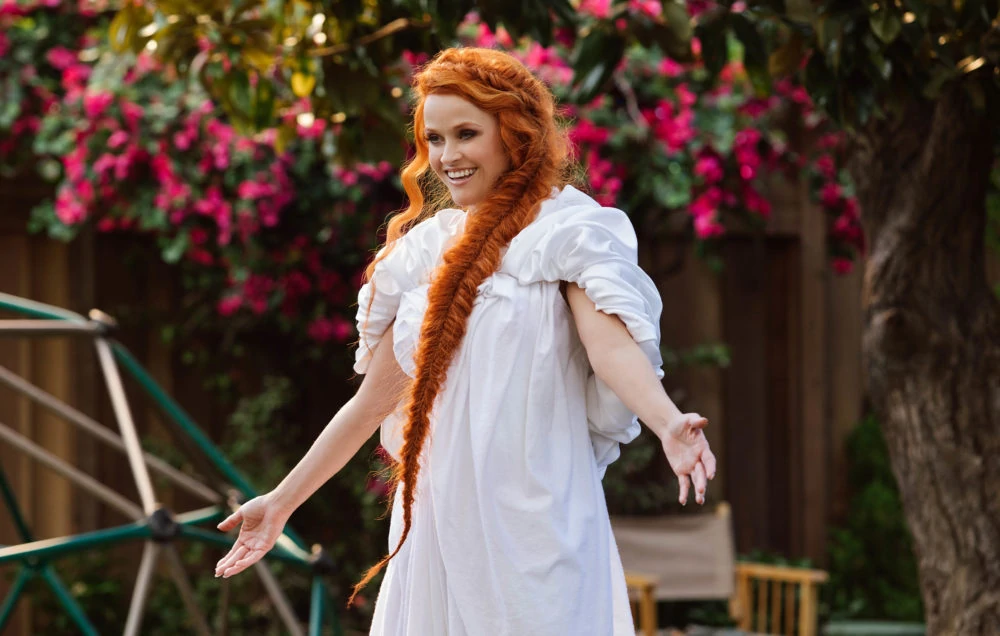
Re-reading another favorite book from my childhood - now that Disney has made a movie of it, we get a new edition -- with photos from the movie production, including Reese Witherspoon as Mrs. Whatsit and Oprah Winfrey as Mrs. Which. And Zach Galiafinkis as the Happy Medium. And whatshername as Mrs. Who.

Another horror of the modern age. 

Might have to see it, just for the blood-bath of criticism it will stir up in me.


I last read and considered this novel in 2010.

Read a different edition this time, and had just as pleasurable an experience this time as I did 12 years ago. If pleasure is the right word for one of the best, and most unusual, novels about WWII.

In the special introduction to the 1976 Franklin Library edition of the novel, Vonnegut wrote:

The Dresden atrocity, tremendously expensive and meticulously planned, was so meaningless, finally, that only one person on the entire planet got any benefit from it. I am that person. I wrote this book, which earned a lot of money for me and made my reputation, such as it is. One way or another, I got two or three dollars for every person killed. Some business I'm in.

Tuesday, July 19, 2022

Every Good Boy Does Fine by Jeremy Denk


Look at Me by Anita Brookner

I enjoyed this novel, yet found myself constantly turning back to the copyright page, to reassure myself that I had read it correctly and that the novel was published in 1983. I think it takes place in the 1960s, but indeed it reads like a novel of the thirties or forties. Concerning a watchful, self-torturing, quiet female librarian in London, embarking on her first real friendship and love affair, who is just beginning to take writing seriously and plans a career doing it, it is correct and laced-up in diction, in character, in dialogue. On the surface,there is no hint of anything swinging about London except the occasional "sex shop" the narrator passes in walking around the city. There is no mention of technology beyond the occasional shared telephone.

That said, the book is a withering, compact 200-page study of loneliness, social vs. private character, and the power of the bold and attractive and lively, over the cautious and quiet.

The savageness is not in the setting, but in the seething feelings the narrator reads in the faces and words of those around her.

"I saw the business of writing for what it truly was and is to me. It is your penance for not being lucky. It is an attempt to reach others and to make them love you. It is your instinctive protest, when you find you have no voice at the world's tribunals, and that no one will speak for you. I would give my entire output of words, past, present, and to come, in exchange for easier access to the world, for permission to state 'I hurt' or 'I hate' or 'I want.' Or, indeed, 'Look at me.' And I do not go back on this. For once a thing is known it can never be unknown. It can only be forgotten. And writing is the enemy of forgetfulness, of thoughtlessness. For the writer there is no oblivion. Only endless memory."


Tuesday, July 12, 2022

The Violin Conspiracy by Brendan Slocumb


Cool plot, excellent music writing about performance, violins, and music culture.

Less enchanted with Slocumb's prose, which is often workaday and one-dimensional, gushing, emphatic, and repetitive.

Friday, July 01, 2022

Late in the Day by Tess Hadley


Didn't love it as much as FREE LOVE. Hadley writes briliiantly about an over-privileged, self-conscious, whiny demographic - it gets to me, over time. Still, gorgeous prose. 

Tuesday, May 31, 2022

Cloud Cuckoo Land by Anthony Doerr


Really enjoyed reading this, after some trepidation after reading alot of the review. As a follow up to the stunning ALL THE LIGHT WE CANNOT SEE, it pales somewhat, as it is more in the line of CLOUD ATLAS, a blurring interwoven text about some humans shared devotion for a fragmentary Greek text. It covers from Ancient Greece until some time well in the future aboard an interplanetary spaceship, and visits the sacking of Constaninople,1950s-to-present day Idaho, a  murderous climate activist, and the Korean War.

Featured Post

Buy my books.

Buy the books on Amazon, and watch videos of some readings.   Please.