Wednesday, May 31, 2017

The North Water by Ian McGuire

A little bit Moby Dick Lite, a little Heart of Darkness.

Compulsively readable!

Monday, May 22, 2017

Rick's Bag of Tricks, a poem by Rick Cannon

Rick's Bag of Tricks


The days shuttle endlessly
undoing the neat weave
of your suit.  You hardly
notice, until one day
the cuff is gone and part
of the sleeve.  You laugh,
buy another.  The trick is
not to trust metaphor.

Of some people you say
"these are mine and these
own me."  Their several glows
seem warm jewels or sloops
to haul yourself up on.
One day you are bereft.  You
might laugh.  The trick is
not to trust friendship.

You shout "Metaphysics!"
Someone replies "Metabolism!"
Moving closer you say "That's
what I meant." The other
answers "Of course." You slow
down.  You move together.  It
is a dance.  The trick is
to trust nothing else.

Rick Cannon


Image may contain: 1 person

Tuesday, May 09, 2017

The Intuitionist by Colson Whitehead


Nicotine by Nell Zink


Clever, odd, arresting and funny novel.  Lots of ideas.

"She was saying that Marxism isn't any better than capitalism, because they're both based on a world without friendship and love, where everything's for sale! A male world, basically. Money instead of nature.  Welcome to New York."

"Medicaid's an instrument of oppression. We'd have had a revolution a long time ago if the poor were dying in the streets like they're supposed to."

"That's something your dad used to say, about how it's the stories we tell ourselves that cause all the problems. If you look reality straight in the eye, you end up a lot less confused.  It's a matter of signal-to-noise ratio. Any story you tell has to be all signal. Any distraction is noise. Anything extraneous is noise. Now try to define extraneous. In life, nothing's extraneous. There's no noise. It's all signal. That's Freud. The early Freud."

"You're not too tired to go to work!"
"It's not like I'm a waitress, or operating a jackhammer or something. All I have to do is get to Manhattan and sit down."

Friday, April 14, 2017

Moonglow by Michael Chabon

Pretty good.  A little long-winded, but maybe that's because I went for the large-type edition, to avoid the long queue for the regular version.  He has an annoying last name, hard to remember how to pronounce.  Shay-bun.  The internet says that this has been verified by his publisher.  I guess Moonglow is a fictional memoir, or an autobiographical novel.  There was a time when I would have cared to find out.  Now, I'll just wait around until I hear it second-hand.

Tuesday, April 04, 2017

1984 by George Orwell

Longer, and more tedious, than I remember when I read it in high school.  The love affair is the most interesting writing -- and it's all being set-up for the (much shorter) interrogation/torture scene.

Friday, March 03, 2017

Lincoln at the Bardo by George Saunders


https://www.bostonglobe.com/arts/books/2017/02/08/grief-ghosts-and-america-lincoln-bardo/1VuOyXTYnREDjOh4clbhiN/story.html

almost too rich to quote:  I could cite the whole thing.  Stunning consisent beautfiul voice.

compare to Dante
compare the Spoon River
compare to our town

liminal sketching of Lincoln

three main narrators, Blevin and the Rev. and ??

the emotional climax at the end:  the black man's ghost enters Lincoln and decides to go with him, out of the cemetary and back to Wash DC, as Lincoln decide to pull for both black and white from then on.

Used loosely, the term "bardo" refers to the state of existence intermediate between two lives on earth. According to Tibetan tradition, after death and before one's next birth, when one's consciousness is not connected with a physical body, one experiences a variety of phenomena. These usually follow a particular sequence of degeneration from, just after death, the clearest experiences of reality of which one is spiritually capable, and then proceeding to terrifying hallucinations that arise from the impulses of one's previous unskillful actions. For the prepared and appropriately trained individuals the bardo offers a state of great opportunity for liberation, since transcendental insight may arise with the direct experience of reality, while for others it can become a place of danger as the karmically created hallucinations can impel one into a less than desirable rebirth.

Wise Children by Angela Carter

Her date of birth, like that of so many actresses, a moveable feast.

Pierrot Mon Ami by Raymond Queneau

Wonderful entertainment.  An aimless young man meets and aimless world.

Pierrot had no particular opinion on public morals, or the future of civilization.  No one had ever told him that he was intelligent.  He had frequently been told, rather, that he behaved like an idiot or that he bore some resemblance to the moon.

When you have a past, Vovonne, you'll realize what an odd thing it is.  In the first place, there's whole chunks of it that have caved in: absolutely nothing left.  Elsewhere, there's weeds that've grown haphazard, and you can't recognize anything there either.  And then there's places that you think are are so beautiful that you give them a fresh coat of paint every year, sometimes in one color, sometimes in another, and they end up not looking in the least like what they were.  Not counting the things we thought very simple and unmysterious when they happened, but which years later we discover aren't so obvious, like sometimes you pass a thing every day and didn't notice it and then all of a suddent you see it.

Thursday, February 16, 2017

Jakob von Gunten by Robert Walser

mad, genius book.  Kafka-esque, for sure, if that can be said of a book that pre-dates him. outsider artist, too, but again, he was ahead of his term.  many juicy quotes follow, before I can decide on anything else to say.  but an extraordinary book to me.  like finding something you should have known was there, after endless years of looking.

One learns very little here, there is a shortage of teachers, and none of us boys of the Benjamenta Institute will come to anything, that is to say, we shall all be something very small and insubordinate later in life. The instruction we enjoy consists mainly in impressing patience and obedience upon ourselves, two qualities that promise little success, or none at all.  Inward successes.  But what does one get from such as these? Do inward acquisitions give one food to eat?

We are small, small all the way down to the scale to utter worthlessness.

Perhaps there is a very very commonplace person inside me. But perhaps I have aristocratic blood in my veins.  But one thing I do know for certain:  in later life I shall be a charming, utterly spherical zero.

When I see candles burning, I always feel that I am wealthy.

To be of service to somebody whom one does not know, and who has nothing to do with one, that is charming, it gives one a glimpse into divine and misty paradises. Even then: all people, or almost all, have something to do with one.

He is the most honest and efficient of us pupils, and efficiency and honesty are inexhaustible and immeasurable domains.  Nothing can excite me so deeply as the sight and smell of what is good and just.  You soon reach the end of feeling about vulgar and evil things, but to get wise to something good and noble is so difficult, and yet also so alluring.

Nothing pleases me more than to give a completely false image of myself to people for whom I have a place in my heart.

Such a peculiar vice: to be secretly pleased to be allowed to observe that one is being slightly robbed.

There's a shattering constant disjunct in his writing, a sort of careless stringing out of a pedestrian narrative with just the right amount of little bits of action to barely keep it moving, but this thin chain is abruptly and constantly elongagated by an enormous link in the chain where the speaker is talking in his inner voice, describing a music in his head with words:  his syntax chops sentence structure into its parts and then crudely puts the body back together again: same words with a significant difference in meaning trucked in by a little difference in order, emphasis, crux, emotion heightened and shortened.

And in fact: what sort of scoundrel would go, without any feeling for love and beauty, to places where only delight forgives what depravity has undertaken?

Therefore I love so deeply every kind of compulsion, because it allows me to take joy in what is illicit.

The mumbling of a grumbler is lovelier to me than the murmuring of a woodland stream...

A person can be utterly foolish and unknowing: as he long as he knows the way to adapt, to be flexible, and how to move about, he is still not lost, but will come through life better perhaps than someone who is clever and stuffed with knowledge.  The way:  yes, yes.

I see his beautiful soul in his face, and it is the soul that most deserves to be caressed.

Our schoolboy noses have the greatest spiritual similarity, they all seem to strive more or less aloft, to where insight into the confusion of life floats and glows.

And it only's too true: an open mouth is a yawning fact, the fact that its owner is dwelling with his few thoughts in some other place than the domain and pleasure-garden of attentiveness.

Writers are just windbags who only want to study, make pictures and observations.  To live is what matters, then the observation happens of its own accord.

"Are you asleep, Parson? All right, sleep, then, there's no harm in your sleeping. You only waste time teaching Scripture. Religion, you see, means nothing today. Sleep is more religious than all your religion. When one is asleep, one is perhaps closest to God.  What do you think?"

To the knives and forks clung the tears of enemies I destroyed, and the glasses sang with the sighs of many poor people, but the tear-stains only made me want to laugh, while the hopeless sighs sounded to me like music.

And from another Walser novel, from Geschwister Tanner, next on my list:

I'm staying here.  It's nice, just to stay.  Does nature go abroad? Do trees travel, to acquire greener leaves elsewhere, and then come back and show themselves off?


Wednesday, February 01, 2017

The Underground Railroad by Colson Whitehead

Great book.  First one of his I've gotten all the way through.  Thought there'd be more too the sci-fi opening conceit of there ACTUALLY being a constructed, mechanical underground railroad that ferried slaves to freedom, but Whitehead uses that sparingly, and instead concentrates on characters travelling as it becomes much more of a realistic, historical emotional narrative.

The Sellout by Paul Beatty

Foy was no Tree of Knowledge, at most he was a Bush of Opinions.

I'm finding this book astoundingly intelligent and funny.  Couldn't get through his THE WHITE-BOY SHUFFLE.  This one feels magnificent though. I laughed aloud at something on every page.  Delicious wounding painful satire.

Friday, January 13, 2017

My Name is Lucy Barton by Elizabeth Strout

Jury still deliberating.  We are asking to review parts of the testimony.

Later:  didn't finish, didn't like the first half.  When I read reviews of it beforehand, I was abashed and felt like I'd somehow missed the cat's pajamas.  It's not even the kitten's dees.  And what acclaim, what reviews.  Why does she get a career out writing a little nothing like this.

Monday, January 02, 2017

Sleepless Nights by Elizabeth Hardwick

When you travel your first discovery is that you do not exist.

Of course these things are not mine.  I think they are usually spoken of as ours, that tea bag of a word which steeps in the conditional.

...all the destinies linked by a likeness of forehead and nose...

While you are living, part of you has slipped away to the cemetery

Tuesday, December 27, 2016

The Naked and the Dead by Norman Mailer

Mailer's splashdown as a novelist, a WWII novel he wrote when he was 24.   Awesomely precocious, covering about three dozen points of view and beautifully set down.  Gore Vidal prissily panned it, in his usual sharp words:  "...informed by a naïveté which was at its worst when Mailer went into his Time-Machine and wrote those passages which resemble nothing so much as smudged carbons of a Dos Passos work."

It is much, more better than that, although it is remniscient of Dos Passos.  For a 25 year old to have written it in 18 months, it's astonishing.

His gelid eyes were very blue... he was efficient and strong and usually empty and his main cast of mind was a superior contempt toward nearly all other mean.  He hated weakness and he loved practically nothing.  There was a crude unformed vision in his soul but he was rarely conscious of it.

Yeah.  And an anger would work in him.  They had torn at each other once, had felt sick when they close together and other people were with them.  Now, in sleep their bodies intruded; there was always a heavy limb in the way.  And the nights together working on them, this new change, this living together between them like a heavy dull weight, washing dishes and mouthing familiar kisses.

By Night in Chile by Roberto Bolano


Down Thunder Road: The Making of Bruce Springsteen by Marc Eliot with the participation of Mike Appel


Springsteen recommends this, in his book.  First 150 pgs of childhood and jersey shore scene were sensational. Then it gets more guarded.  Still good, but all his references to P*ssy (and there are more than a few) are euphemistic.  That seems to have always been the one vice he'll cop to, besides perfectionism and workaholicism and solipsism.

"with the participation of Mike Appel" indeed.  Allegedly setting straight the issue of the monumental lawsuit between Bruce Springsteen and his manager-cum-producer Mike Appel, which prohibited Springsteen from recording for two years in 1976-1978,  Interesting, as are all things Springsteen to me, but the thought of Mike Appel claiming some part of Springsteen's mind-boggling career, even if it's just a fraction, is ridiculous.  Keep your money, Mike, and shut your hole.

Ninety-nine Stories of God by Joy Williams

 Meh.  What's the big deal?  The stories are short and inconsequential.  It's like she wishes she was South American or something-- pitched parables that lack magic. So what if she has death in her heart?  Joy Williams needs to cook with a little more gas than this.


Saturday, December 17, 2016

Goethe: The Poet and the Age, Vol1, The Poetry of Desire by Nicholas Boyle

For a long time I looked for a wife; I looked,  and found only whores. In the end I picked you up, little whore, and discovered a wife.

Well, I might have loved boys too; but girls are what I prefer. If I tire of one as a girl, I can still use her as a girl.

Wanted:  a small dog that neither growls nor bites; can eat broken glass and can shit diamonds.

When I look at the words of the masters, I see what they did; when I look at my own bits and pieces, I see what I ought to have done.

A quiet scholar once left a large party and went home.  He was asked, 'How did you like it?' 'If they were books,' he said, 'I would not read them.'

The Lime Twig by John Hawkes

startling 1961 novel, more of an extended prose poem than a detective narrative, which is how it's framed.

Friday, October 28, 2016

Faithful Place by Tana French

Another one from Tana French, whose Broken Harbor I also very much enjoyed.

A police procedural that moves into a family history, and the drama of a mystery in the past that slowly unravels and explains alot of the present.

Masterful.  Almost more literary fiction than detective genre.  Would like to see her write outside detective structure -- and maybe she already has?

Friday, October 07, 2016

Born to Run by Bruce Springsteen

Sailed through this, enjoying it all.   That said, the first 150 pages are best: something about his childhood and adolescence, and the Freehold/Jersey Shore years rings more true than his professional narrative.  Maybe he's more guarded, since he became very famous very quickly, and was plagued by fame (without riches) for the first ten years of his celebrity.

I liked his splendid summary about legendary rock stars and their early deaths - "Aging is scary but fascinating."  His summary?  "The exit in a blaze of glory is bullshit."(p. 214)  His analysis about learning the limitations of his own singing voice and transcending them was also great (p.  494)

His wise decision to seek analysis to help him through depression does not make the most interesting reading:  there is a lot of inner-child speak and other junk.

Later in the book, he assumes his more bloviated gospel-preacher voice, and tends to philosophize generally and use some of his more obvious song metaphors, rather than provide details. Still, for a notoriously private individual who perversely gives so much of himself publically in performance, the book showed me important stuff in his life.

the "Chapter and verse" spotify playlist is great - not as much for the Springsteen songs themselves (who hasn't heard them? and a million times?) as for the 100 or so songs by other artists that were crucial to him.

https://open.spotify.com/user/brucespringsteenmusic/playlist/2DipgwFGoYJghKkr2MK08S

Monday, September 12, 2016

The Sympathizer by Viet Thanh Nguyen

A heavy book-- the second half really picks up.

It's heavy because it threatens to be so many other books -- an immigrant experience book, a war book, a spy book -- on the way in the end to be a much more philosophical book about existence and doubleness and memory.

And a truly pentrating look at the past fifty years from inside a Vietnamese mind.

Friday, August 19, 2016

Straight Man by Richard Russo

Funny as ever fourth time around.  Well, perhaps a tad more painful.  But maybe that makes it more funny? William of Occam would probably disagree.

Tuesday, August 16, 2016

The Lives of Others by Neel Mukherjee

great sprawling multigenerational novel of the Ghosh family of Calcutta.  Mukherjee writes brilliant, close description of both the natural world and the inner emotional lives of his characters.

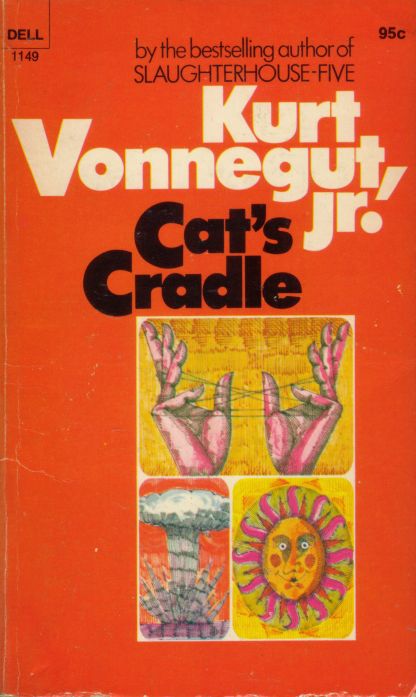
Cat's Cradle by Kurt Vonnegut, Jr.

great worldview but a little lame on characters and plot.   teeming with great ideas.  quick and easy to read.  easy to see why it's a favorite of adolescents.

Thursday, July 14, 2016

Heat & Light by Jennifer Haigh

Exceedingly well-written, burnished totally boring novel about fracking and its effect on persons, peoples, communities.  There's something about that evenly-spread "American" third person omniscient narrator voice that I loathe, mixed in with pious liberal journalistic info.

Sunday, July 03, 2016

Under the Net by Iris Murdoch

Events stream past us like these crowds and the face of each is seen only for a minute.  What is urgent is not urgent for ever, but only ephemerally.  All work and all love, the search for wealth and fame, the search for truth, like itself, are made up of moments which pass and become nothing.  Yet through this shaft of nothings we drive onward with that miraculous vitality that creates our precarious habitations in the past and the future.  So we live:  a spirit that broods and hovers over the continual death of time, the lost meaning, the unrecpatured moment, the unremembered face, until the final chop that ends all our moments and plunges that spirit back into the void from which it came.
[from Under the Net]


Friday, June 10, 2016

Trouble Boys: The True Adventures of The Replacements by Bob Mehr


"I guess I wore a plaid shirt, and yes, I played real loud, but Nirvana sounds to me like Boston with a hair up its ass." Paul Westerberg.


Friday, May 27, 2016

Everybody's Fool by Richard Russo

Pretty great sequel to Nobody's Fool.  Takes it's time revving up, but second half is pure delight, hard to put down.  Making Police Chief Raymer the central character this time around changes the whole world of Bath Russo originally created, you see it differently through and through.

Saturday, April 09, 2016

Voyage of the Sable Venus by Robin Coste Lewis


THE MOTHERS

for and after Gwendolyn Brooks
for and after the Kitchenette Building

We meet – sometimes – between the dry hours,
Between clefts in the involuntary plan,
Refusing to think of rent or food – how
Civic the slick to satisfied from man.

And democratic. A Lucky Strike each, we
Sponge each other off, while what’s grayed
In and gray slinks ashamed down the drain.
No need to articulate great restraint,

No need to see each other’s mouth lip
The obvious. Giddy. Fingers garnished
With fumes of onions and garlic, I slip
Back into my shift then watch her hands – wordless –

Reattach her stockings to the martyred
Rubber moons wavering at her garter.

Robin Coste Lewis

Monday, March 28, 2016

Vintage Stuff by Tom Sharpe

so-so.  first half strong, second half falters. as the line goes from Bad Santa, "They can't all be winners, kid."

Tuesday, March 15, 2016

The Great Pursuit by Thom Sharpe

Another winner, this time squarely in the sights is the world of authorship, publishing -- and penmanship. All farce-y and crazy until the last 30 pages, when it takes on a new serious weight of its own and Sharpe pulls some Borges-ian tricks out.  Mirrors, copies of copies, posthumous pre-quel diaries by dead men.  Has to be read to be believed. Profoundly funny.

Saturday, March 05, 2016

Fates and Furies by Lauren Groff

Anger's my meat; I sup upon myself,
And so shall starve with feeding.

Groff writes terrific brainy evocative prose.  Seems incapable of less than a shining sentence.

The cabdriver, his nose besponged by pores, looked at her for a long while in the rearview mirror and asked her if she was all right.  When she didn't answer, he said soothingly, "You may cry here, cabbage.  Cry as much as you wish.  It is no hardship to watch a pretty woman cry."

Overwhelming, at times though, in how rich the outer and inner lives of her characters seem.  Mathilde, for one:  a super-sweet character:

She did mind something she never said out loud:  she'd wished her husband was better at what he chose to do.

"And she can fuck herself lingeringly with a white-hot pitchfork.  In her dark shit-star of an asshole," Mathilde said.

Wednesday, February 17, 2016

Porterhouse Blue by Tom Sharpe

Not his best, but still gets it done.  A send-up of English academics and the Cambridge scene.  Little topsy-turvey plot action.  Excellent early scene where graduate student fills two gross of condoms with gas from his dorm room meter and tries to stuff them up the chimney.

Wednesday, February 10, 2016

The Man Who Loved Dogs by Leonardo Padura

What was true was that reading and writing about how the greatest utopia men had ever had within their reach had been perverted, diving into the catacombs of a story that seemed more like divine punishment than the work of men drunk with power, eager for control, and with pretensions of historical transcendence, I had learned that true human grandeur lay in the practice of kindness without conditions, in the capacity of giving to those who had nothing, but not what we have left over but rather a part of what little we have -- giving until it hurts without practicing the deceitful philosophy of forcing others to accept our concepts of good and truth because (we believe) they're the only possible ones and because, besides, they should be grateful for what we give them, even when they didn't ask for it.

This massive, towering novel – ostensibly about the assassination of Leon Trotsky in Mexico in 1940 by a disgruntled Spanish nationalist – is really about the festering and implosion of Soviet Communism over 50 years.

Three separate storylines cover the 50 years, back and forth, across three continents – a failed Cuban writer who meets a strange ailing man on the beach in Cuba in the late 1990s, the Spanish Communist, Ramon Cortazer, who mortally wounded Trotsky with an ice hatchet, and Trotsky himself, the intellectual original Politburo member who fell out with Stalin in 1925 and was exiled from Russia.

The style – a length, discursive, need I say dialectical style – can be bruising.  Apparently the translator took pains to make it sound like the original Cuban vernacular in which it was written, so dialogue in particular sometimes features some whacked-out syntax decisions.  Long, long compound and complex sentences.

To me it was an enormously educational book (assuming it’s factual) on the evolution of Soviet Communism, Trotsky’s role in digressing from Stalin’s party-line model (which argued for a Soviet-only communist system) and tacking back to Marx’s original model which called for an international worker’s revolution.

Wednesday, February 03, 2016

The Very Persistent Gappers of Frip by George Saunders (author) and Lane Smith (illustrator)

Odd little book by an author I like a lot (Saunders) and an illustrator I like too (The Stinky Cheese Man.)

Beautiful color illustrations,  text is a little baffling, in that Saunders way.  Not really enough room for him to make his usual dramatic satirical argument.  Suppose it's an allegory about climate change, or political interdependence.  Un clear.

But entertaining!

A Free State by Tom Piazza

Interesting premise and framing to this runaway slave narrative.  But I quickly lost interest in the pulse-less prose.

Tuesday, February 02, 2016

The Throwback by Tom Sharpe

Delicious violent British farce about a man from the fells who won't give up his property.  Has to be read to be believed.  And some great mock-ballads!

Featured Post

Buy my books.

Buy the books on Amazon, and watch videos of some readings.   Please.