Sometimes animals and machines look more human than people do. 30
Talk not with scorn of Authors- it was the chattering of the Geese that saved the Capitol. Coleridge
www.seanenright.com
seanenright.blogspot.com
Meh. Apparently there are recurring characters from GOON SQUAD, but I don't remember it clearly enough for continuity. Some interesting stuff but thought the second half trailed off instead of building up to something.
Re-reading another favorite book from my childhood - now that Disney has made a movie of it, we get a new edition -- with photos from the movie production, including Reese Witherspoon as Mrs. Whatsit and Oprah Winfrey as Mrs. Which. And Zach Galiafinkis as the Happy Medium. And whatshername as Mrs. Who.
Another horror of the modern age.
Might have to see it, just for the blood-bath of criticism it will stir up in me.

I last read and considered this novel in 2010.
Read a different edition this time, and had just as pleasurable an experience this time as I did 12 years ago. If pleasure is the right word for one of the best, and most unusual, novels about WWII.
In the special introduction to the 1976 Franklin Library edition of the novel, Vonnegut wrote:
The Dresden atrocity, tremendously expensive and meticulously planned, was so meaningless, finally, that only one person on the entire planet got any benefit from it. I am that person. I wrote this book, which earned a lot of money for me and made my reputation, such as it is. One way or another, I got two or three dollars for every person killed. Some business I'm in.
I enjoyed this novel, yet found myself constantly turning back to the copyright page, to reassure myself that I had read it correctly and that the novel was published in 1983. I think it takes place in the 1960s, but indeed it reads like a novel of the thirties or forties. Concerning a watchful, self-torturing, quiet female librarian in London, embarking on her first real friendship and love affair, who is just beginning to take writing seriously and plans a career doing it, it is correct and laced-up in diction, in character, in dialogue. On the surface,there is no hint of anything swinging about London except the occasional "sex shop" the narrator passes in walking around the city. There is no mention of technology beyond the occasional shared telephone.
That said, the book is a withering, compact 200-page study of loneliness, social vs. private character, and the power of the bold and attractive and lively, over the cautious and quiet.
The savageness is not in the setting, but in the seething feelings the narrator reads in the faces and words of those around her.
"I saw the business of writing for what it truly was and is to me. It is your penance for not being lucky. It is an attempt to reach others and to make them love you. It is your instinctive protest, when you find you have no voice at the world's tribunals, and that no one will speak for you. I would give my entire output of words, past, present, and to come, in exchange for easier access to the world, for permission to state 'I hurt' or 'I hate' or 'I want.' Or, indeed, 'Look at me.' And I do not go back on this. For once a thing is known it can never be unknown. It can only be forgotten. And writing is the enemy of forgetfulness, of thoughtlessness. For the writer there is no oblivion. Only endless memory."
Cool plot, excellent music writing about performance, violins, and music culture.
Less enchanted with Slocumb's prose, which is often workaday and one-dimensional, gushing, emphatic, and repetitive.
Didn't love it as much as FREE LOVE. Hadley writes briliiantly about an over-privileged, self-conscious, whiny demographic - it gets to me, over time. Still, gorgeous prose.
Really enjoyed reading this, after some trepidation after reading alot of the review. As a follow up to the stunning ALL THE LIGHT WE CANNOT SEE, it pales somewhat, as it is more in the line of CLOUD ATLAS, a blurring interwoven text about some humans shared devotion for a fragmentary Greek text. It covers from Ancient Greece until some time well in the future aboard an interplanetary spaceship, and visits the sacking of Constaninople,1950s-to-present day Idaho, a murderous climate activist, and the Korean War.
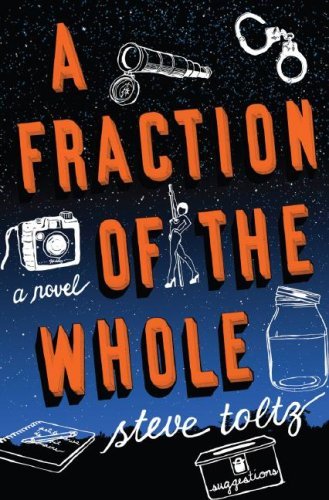
Shades of PANAMA by Thomas McGuane, one of my favorite novels. Toltz's style is frenetic, brilliant and blinding: he stacks up aphorisms and similes like nobody's business, it's too packed with great lines to quote here with any comprehensiveness.
Strange unsettling sort of boring story of a construction worker who used to be a soccer goalie and gets fired and murders a woman. Rest of narrative follows his unraveling sanity - I guess - as language and time become unreal to him and he waits to be apprehended. Sort of remember seeing a film version of it in college.
An amazing experience of a novel, about the imagined life of Ludwig Wittgenstein, Bertrand Russell, and G.E. Moore. Duffy's writing seems almost out of another time, recalling Henry James, and even some of the Victorians. It's a dense, moving, obsessive book
Can't believe I had never read this. Marvelous. Driven to it by its echoes in the Thomas McGuane short story "Fugitives."
Mind numbingly long and complicated acting-within-acting-within-terror-cells. May or may not finish it. Awesome early 1970s Greece slutty hippies, which is something.
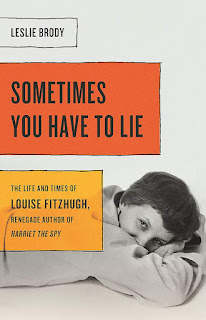
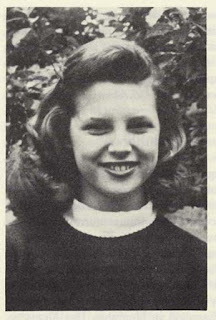
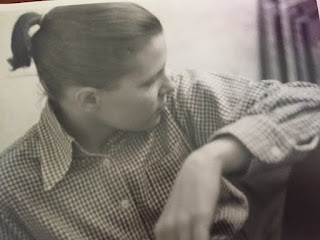
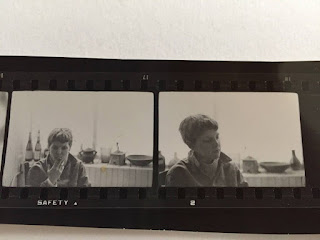
Interesting if thin biography of Fitzhugh. There was an earlier one from 1991 by Virginia Wolf that is apparently more scholarly. This one is decidedly not. Brody does a lot of speculation about what Harriet might have done, whom she might have, how she might have felt. She does talk to secondary sources, and has some access to correspondence. Her lifelong correspondence with James Merrill and Peter Taylor would be interesting to see. But the photo section is paltry and it seems like an entire book could be made of Fitzhugh's paintings, drawings, and illustrations. Each published book is plot summarized at length. There's a lengthy afterword explaining the tight control over her unpublished work exercised by her estate (which I would have preferred as a preface). And Fitzhugh's final years are covered in snap - she died suddenly of a brain aneurysm in 1974 at the age of 46. And the decline must have been sad.
She drank too much and seemed to suffer from manic depression/bipolar. There is a real sadness behind it all that is intermittently touched upon.
Fitzhugh was a monumental figure in both her revolutionizing of children's literature, and the strong unapologetic presentation of her sexuality.
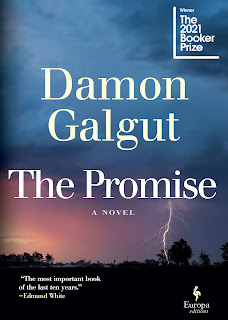
Really like this unusual book. I don't know if it's "the most important book of the last ten years," as Edmund White blurbs, but Galgut's style and voice are unique. Time progresses back and forth, past, present and future, and side by side as well, leap-frogging the point of view from a major character, to a minor character, to a slightly more prominent minor character, then back to a main character - and time has passed in the shuttle of lives.
Another fascinating urban ethnographic fieldwork study by my old college chum Mitchell Duneier. He spends several years among the sidewalk magazine vendors on Sixth Avenue in Greenwich Village, NY, delving deeply into the culture, commerce and psychology of the mostly "unhoused" African American men who created a micro economic ecosystem in order to maintain their own self-respect.
Great collection of short stories by the noted Irish novelist. I was drawn in by the final story, ROETHKE IN THE BUGHOUSE, about American poet Theodore Roethke's brief pungent nervous breakdown while visiting the West of Ireland. But all the stories are good.
Like the first half very much but was disappointed with the second which I found hasty, melodramatic, and mis-focused.
A very interesting sociological history of the American "ghetto," tracking its origins (at least eytmologically) to the Venetian ghettos of the 1500s, where Jews were sequestered. My old college chum analyzes a handful of scholars since the 1940s who have attempted to quantitize and reason out how the American ghetto began and how it might be corrected. Among other revelations to me, Duneier traces the origin of the concept of "white privilege" to Blauner in 1972.
Buy the books on Amazon, and watch videos of some readings. Please.