Sunday, February 13, 2022

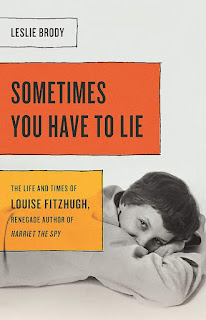
SOMETIMES YOU HAVE TO LIE: The Life and Times of Louise Fitzhugh, Renegade Author of Harriet the Spy By Leslie Brody


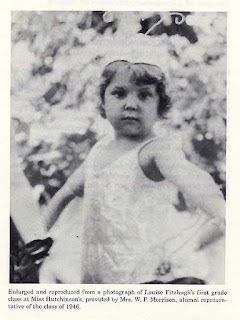
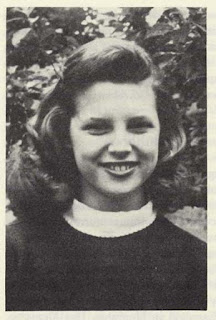
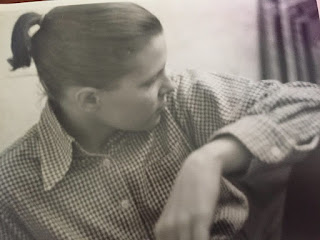
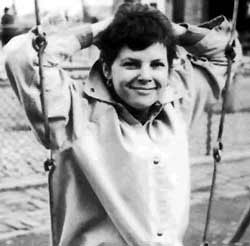
Interesting if thin biography of Fitzhugh. There was an earlier one from 1991 by Virginia Wolf that is apparently more scholarly. This one is decidedly not. Brody does a lot of speculation about what Harriet might have done, whom she might have, how she might have felt. She does talk to secondary sources, and has some access to correspondence. Her lifelong correspondence with James Merrill and Peter Taylor would be interesting to see. But the photo section is  paltry and it seems like an entire book could be made of Fitzhugh's paintings, drawings, and illustrations. Each published book is plot summarized at length. There's a lengthy afterword explaining the tight control over her unpublished work exercised by her estate (which I would have preferred as a preface). And Fitzhugh's final years are covered in snap - she died suddenly of a brain aneurysm in 1974 at the age of 46. And the decline must have been sad.

She drank too much and seemed to suffer from manic depression/bipolar. There is a real sadness behind it all that is intermittently touched upon.

Fitzhugh was a monumental figure in both her revolutionizing of children's literature, and the strong unapologetic presentation of her sexuality.



Thursday, February 03, 2022

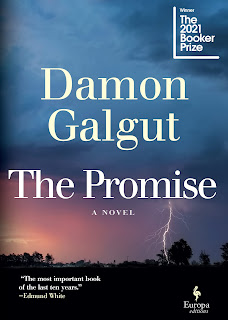
The Promise by Damon Galgut


Really like this unusual book. I don't know if it's "the most important book of the last ten years," as Edmund White blurbs, but Galgut's style and voice are unique. Time progresses back and forth, past, present and future, and side by side as well, leap-frogging the point of view from a major character, to a minor character, to a slightly more prominent minor character, then back to a main character - and time has passed in the shuttle of lives.

The Lord's creation is amplified when you use heightened language to describe it. [71]

Perhaps she doesn't pray in these words, or in any words at all, many prayers are uttered without language and they rise like all the rest. Or perhaps she prays for other things, because prayers are secret in the end, and not all to the same god. [83]

Sidewalk by Mitchell Duneier


Another fascinating urban ethnographic fieldwork study by my old college chum Mitchell Duneier. He spends several years among the sidewalk magazine vendors on Sixth Avenue in Greenwich Village, NY, delving deeply into the culture, commerce and psychology of the mostly "unhoused" African American men who created a micro economic ecosystem in order to maintain their own self-respect.

To be sure, there are some "broken windows" on these blocks. But mostly there are windows that look broken to people who are just passing by. Because Americans ruthlessly use race and class categories as they nagivate through life, many citizens generalize from the actual broken windows to all the windows that look like them-- and assume that a person who looks broken must be shattered, when in fact he is trying to fix himself as best he can. Only by understanding the rich social organization of the sidewalk, in all its complexitiy, might citizens and politicians appreciate how much is lost when we accept the idea that the presence of a few broken windows justifies tearing down the whole informal structure. [315]

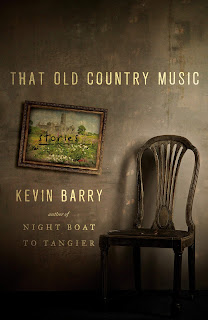
That Old Country Music by Kevin Barry


Great collection of short stories by the noted Irish novelist. I was drawn in by the final story, ROETHKE IN THE BUGHOUSE, about American poet Theodore Roethke's brief pungent nervous breakdown while visiting the West of Ireland. But all the stories are good.


You know they say it warms your three times, wood. When you cut it down, when you carry it, when you burn it. [35]

...proud as a hawk and poor as a wren... [73]

Love, we are reminded, yet again, is not about staring into each other's eyes; love is about staring out together in the same direction, even if the gaze has menace or badness underneath. [96]

"Marry the shop girl," she said. "Marry the factory line. Marry the barmaid. MARRY THE WHORE. But never, never marry the actress, Tony."

Monday, January 24, 2022

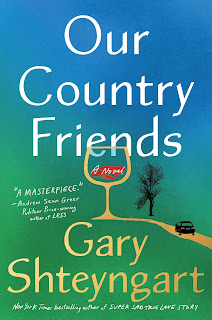
Our Country Friends by Gary Shteyngart


Like the first half very much but was disappointed with the second which I found hasty, melodramatic, and mis-focused. 
Set squarely in the current moment, the novel follows five months in upstate New York where three old dear college friends and several others sequester to escape the virus.


But he had to think like a character in a Chekhov play, forever taunted by desires but trapped in a life much too small to accommodate the entirety of a human being. [120]

Monday, January 17, 2022

Rizzio by Denisa Mina

Good weird one from the accomplished Scottish police/procedural novelist. But just a long short story, really.

Tuesday, January 11, 2022

Ghetto by Mitchell Duneier


A very interesting sociological history of the American "ghetto," tracking its origins (at least eytmologically) to the Venetian ghettos of the 1500s, where Jews were sequestered. My old college chum analyzes a handful of scholars since the 1940s who have attempted to quantitize and reason out how the American ghetto began and how it might be corrected. Among other revelations to me, Duneier traces the origin of the concept of "white privilege" to Blauner in 1972.

This made it easier for the Nazis to take the genocide to the Jews than to take the Jews to the genocide. [218]

The Magician by Colm Tóibín


Excellent if a little muted. I feel ashamed to have never finished any of Thomas Mann's full-length novels, though I continue to return to them, so it was a guilty pleasure to read this novelistic treatment of Mann's life. 

Toibin was reportedly motivated by the release of Mann's private journals and letters, which demonstrated his erotic attraction to men. The novel is undercut with a running thread of Mann's conscious and subconscious sexual feelings for men and his apparent decision not to act on them.  At the same time, he had six children with his wife Katia in what the novel illustrates as a lively, loving marriage.

Mann was a celebrity author and his children and brother suffered from his fame. According to Toibin's novel, he lived mostly for his work, in his study, and left the emotional upbringing of his children to his wife.

Worthwhile but strange.

Monday, January 10, 2022

Crossorads by Jonathan Franzen


Mixed feelings. Definitely too long. First half sailed past me promisingly, but in second half I got bogged down. Another cast of increasingly unsympathetic characters. The faith stuff was good for awhile, but hard to believe that the parents, and son Clem and daughter Becky, would all think (and speak) so profoundly about their faith strengths and disappointments.

Monday, December 27, 2021

The Bushwhacked Piano by Thomas McGuanebath

There was nobody here to make him see the world as a mud bath in which it is right tough to keep showing a profit. He invented a joke to the effect that blood was always in the red and death was always in the black; and thought: What a great joke! (35-36)

In the past, he had run up and down America unable to find that apocryphal country in any of its details. His adrenalin cortex spumed so much waste energy that a lot of amazing things happened. And he deliberately changed his highway persona day by day; so that, across the country, he was variously remembered for his natty dress, for his opposite of that, for his persistent collection of “data,” for his arbitrary and cyclonic speechmaking, for his avowed devotion to his mother and father, for his regular bowel movements, for his handsome rather loosely organized mock-Magyar face, for his tiny library and transistorized machines locked away in ammunition tins, for his purported collection of the breakfast foods of yesteryear, and for his habitual parabolic coursing through the U.S.A. with attendant big trouble, pursuits and small treasured harbors of calm or strange affections along traveling salesman lines, facing enemies with billboard-size declarations of a dire personal animus, cluttering hundreds of small midland streets with regrettable verbs and nouns, sharp ones, heavy ones and ones which made barricades and tanktraps in peaceful summer villages where no one was asking for trouble.

In most ways it had been an awful strain, one he’d been glad to finish. Now, being on the verge of it again, he felt an uproarious tension in his mind. (40-41)

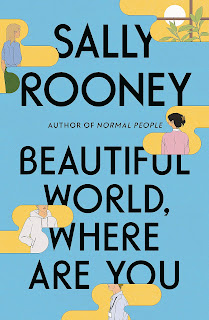
Beautiful Worl, Where Are You by Sally Rooney


I have similar complaints about this novel to the ones I had about her NORMAL PEOPLE of several years ago.  But that one I ended up liking. This one is too much. The dialogue is simply not credible -- not to mention the tediously long, trumped-up email/letter exchanges. No one speaks like that. And her cast of characters are some loathsome, self-obsessed, privileged folk.

Nothing happens in this book except for dialogue, and some sex. Way too much dialogue and not enough sex. Although some of the dialogue is about sex, which I suppose should count fractionally to her credit.

The three childhood friends, two women and a slightly older man, and one other man, circle each other warily in a fog of hurt feelings, disappointments, and subtle reprovals. The character Felix, who seems to work in an Amazon-like distribution warehouse, is the closest thing to a real-life blue-collar class struggler we get. And his biggest injury is a paper cut. The famous novelist Alice apparently had a serious nervous breakdown and continuing psychiatric problems mostly because of her success and the way she has legions of fans who think they know her and think they love her or hate her. Boo hoo.

That said, she has a crystalline prose style.

To those who would say she is the millennial generation's Henry James - well, ok, no one said that, and I'm just saying that for straw man fun - I would say, There is something to her inquisitive rational dissection of human feeling and emotion that recalls the master.

How much of this is sour grapes, my envy at Rooney's success? 33 to 37%. How much of this is being spiteful for fun? 8%. I should write more, if I truly dislike it that much, or should not have written at all.  It's a draw.

Sunday, December 19, 2021

Key West Writers and Their Houses by Lynn Mitsuko Kaufelt


So far I've only read the Thomas McGuane entry (natch) where I discovered his personal favorite among his novels is PANAMA, which is also the least well-known, and also, coincidentally, my favorite. 1986 publication that might well have changed from McGuane, but not for me! Black and white photos. Xmas gift from my dear friend Steve Hayes.

Arcadia by Lauren Groff


Hippie commune novel. Acclaimed. Withholding judgement. Elegant writing so far, but slow going.

Filthy Animals by Brandon Taylor


Disliked first story, liked second story. Stay tuned.

The Invisible Man by H.G. Wells


Hesitate to call it science fiction, as it's a very realistic social commentary on what we would do if an invisible man was in our midst. Particularly like the IM's Beckettian slave Mr. Marvel, whom he enslaves to carry around all the money's he's stolen, as the IM can't carry stuff. And so on.

Artemis by Andy Weird


Underwhelming. Least favorite of his three novels. His "female narrator" voice not convincing.

Friday, November 19, 2021

The Secret History by Donna Tartt


“Why does that obstinate little voice in our heads torment us so? Could it be because it reminds us that we are alive, of our mortality, of our individual souls – which, after all, we are too afraid to surrender but yet make us feel more miserable than any other thing? It is a terrible thing to learn as a child that one is a being separate from the world, that no one and no thing hurts along with one’s burned tongues and skinned knees, that one’s aches and pains are all one’s own. Even more terrible, as we grow older, to learn that no person, no matter how beloved, can ever truly understand us. Our own selves make us most unhappy, and that’s why we’re so anxious to lose them, don’t you think? Remember the Erinyes?”

Gorgeously written, leaden and long, and pretentious,  but I couldn't stop reading. A lesson to be learned about writing melodrama, page-turnings, etc. What we know about each insufferable main character is not enough to distinguish them one from another, except for Julian, their magister, who remains mostly hidden from the action but limned in by indirect reference.

James Wood of the London Review of Books gave it a mediocre review, writing: "The story compels, but it doesn't involve...It offers mysteries and polished revelations on every page, but its true secrets are too deep, too unintended to be menacing or profound."

Monday, November 01, 2021

Bewilderment by Richard Powers


The Red Badge of Courage by Stephen Crane


Why I'm just getting around to reading this now we'll never know. Pretty amazing, atmospheric, psychological novel about a young man's first days serving in the Civil War. Completely unconventional. Almost all of the plot is mental, internal.

In the present, he declared to himself that it was only the doomed and the damned who roared with sincerity at circumstance. Few but they ever did it. A man with a full stomach and the respect of his fellows had no business to scold about anything that he might think to be wrong in the ways of the universe, or even with the ways of society. Let the unfortunates rail; the others may play marbles. (p. 83, Bantam Classic, 2004)

Tuesday, October 12, 2021

Sabbath's Theater by Philip Roth

Loved this first time I read it, when it came out in 1994. First Roth (along with American Pastoral) that I felt was really had serious scope, family history, character depth. Also enjoyed is this time around, but the sex continues cringey.

The mad puppeteer Micky Sabbath loses his shit. In swirling flashbacks he relates his several wives, his stunted 1960s career as an obscure genius actor and performer, then pushes back to his childhood in the 30s and 40s in Jersey and the pivotal, inescapable loss of his brother Mortie in WWII.

When We Cease To Understand the World by Benjamin Labatut


Wednesday, September 22, 2021

Harpo Speaks! by Harpo Marx


Ohio by Stephen Markley


Great, thoughtful novel: high school reunions and the effect of the Iraq War on America in the early 21st century.

While hollering and breathing so long so deep
Memory came on and dove down to my sleep 
Dreaming this memory of space all around
Silence becomes breath becomes thought becomes sound.
John Hardee

He thought of the sudden pressure in his eardrums when the bomb went off beneath the wheels. The screaming pain in his skull and how the world abruptly went half-dark. Three tours. He gave his youth to the dust of those theaters. An eye, some skin, blood, and hair, and his ability to walk more than a few miles without a crippling pain in his knees and an ache in his spine that made him feel seventy years old. On tour #3, the day before the incident on Highway 1, he was reading about Ohio’s place in the Civil War and came across a quote about a Union general: At the sight of these dead men whom other men had killed, something went out of him, the habit of a lifetime, that never came back again: the sense of the sacredness of life and the impossibility of destroying it.

 Then you get tired and lie down and wait for the medevac. A part of you is sickly impressed with how the enemy orchestrated all this. They got you good this time. You figure your life is over, but the investigation will clear you easily. You saw a threat in the cell phone boy and removed it from your section. The bullet Rudy took to the head—a 5.56mm piece of U.S. hardware—it turns out that came from extra ammo carelessly left in the rear cooking off in the heat. And lying there in the dust, head buzzing from the burning fuel, the wind smoldering with black smoke and ash trailing to a seared pink twilight sky, you understand that something’s gone out of you, the habit of your lifetime. Any notion of the sacredness of life or the impossibility of destroying it. You go over to what’s left of your friend, sit down, bleed from your face, and wait for some rescue. [p. 358]

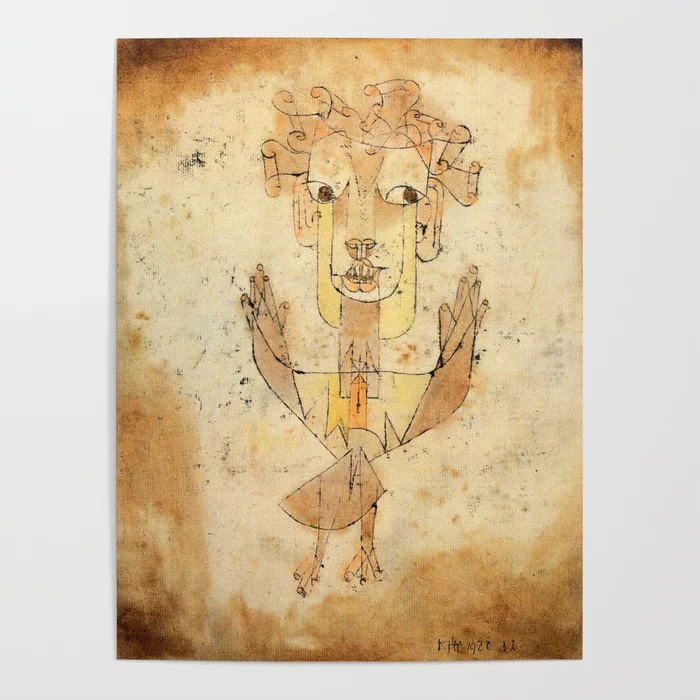
Source: Theses on the Philosophy of History (1940), IX Context: A Klee painting named ‘Angelus Novus’ shows an angel looking as though he is about to move away from something he is fixedly contemplating. His eyes are staring, his mouth is open, his wings are spread. This is how one pictures the angel of history. His face is turned toward the past. Where we perceive a chain of events, he sees one single catastrophe which keeps piling wreckage upon wreckage and hurls it in front of his feet. The angel would like to stay, awaken the dead, and make whole what has been smashed. But a storm is blowing in from Paradise; it has got caught in his wings with such violence that the angel can no longer close them. This storm irresistibly propels him into the future to which his back is turned, while the pile of debris before him grows skyward. This storm is what we call progress.

Source: https://quotepark.com/quotes/1938988-walter-benjamin-this-storm-is-what-we-call-progress/


Paul Klee "Angelus Novus 1920" Poster


Thursday, September 09, 2021

Thirst for Love by Yukio Mishima

To me this is a false diary, although no human being can be so honest as to become completely false. (p.17)

Tuesday, September 07, 2021

The Humbling by Philip Roth


Interesting start, describing a distinguished actor in his 60s who loses the ability to act. Sort of devolves into a pervy Roth sex fantasy though. Not that that stopped me from finishing it. Movie with Al Pacino supposed to be good, looking forward to watching it.

Monday, August 23, 2021

Who is Maud Dixon? by Alexandra Andrews

 Pretty good literary whodunit. Along the lines of THE PLOT.


The Five Wounds by Kirstin Valdez Quade


Really great, surprisingly moving story of a family in New Mexico: grandmother dying of a brain tumor that no one else knows about, singe unemployed alcoholic father trying to get it together (plays Jesus in Passion play at local morales, has actual nails hammered into his palms), his sixteen year old pregnant daughter trying to get her life together. Very fine, close writing.

Homeland Elegies by Ayad Akhtar


good, strange mix of fiction and memoir.

Sunday, July 25, 2021

Lady in the Lake by Laura Lippman

Loved this. First of Lippman I've read, will seek out others. 1960s Baltimore, a 36 year old Jewish woman leaves her husband and seeks a career as a crime reporter, stumbling over clues to an  African-American woman's crucial unsolved murder.

Wednesday, July 14, 2021

Monday, July 12, 2021

The Invisible Live of Addie LaRue by V. E. Schwab


Interesting concept but her exhaustiing prose is super-stuffed with melodrama. And I LIKE melodrama, but not to drown in it. At the critical juncture of page 60, but may not continue.

Bullet Park by John Cheever


JC has said of Bullet Park, "I'd like to write a gothic novel without being caught in the act."

I loved this one, even though the final 10 pages or so are ridiculously fast-paced, after a completely langorous setup.

Some reactions: 

Granted, Bullet Park is a strange performance, and it was a bad sign that even reviewers who were nothing but well disposed to Cheever seemed a little puzzled. A few months before her review appeared in the Washington Post Book World, Joyce Carol Oates had been quoted as saying that she was Updike's and Cheever's “ideal reader” (“whatever they write I read immediately, and I read it again two or three times”), so it made sense perhaps that she and Updike were en rapport in regard to Bullet Park: neither thought the book amounted to a novel, properly speaking, but rather that it worked (as Updike wrote in the London Times) “as a slowly revolving mobile of marvellously poeticized moments,” or, as Oates put it, “a series of eerie, sometimes beautiful, sometimes
overwrought vignettes.” Oates knew better than to worry whether the plot was “convincing” or not, pointing out that Cheever was if anything bent on making his plot as outlandish as possible; and yet, for all the novel's seeming absurdity, said Oates, it conveyed a sense of “terror … as deadly, more deadly, than any promised in the glib new genre of ‘black comedy’ Cheever has been writing such comedy for decades.” John Leonard, whose review appeared in the daily New York Times, also realized that conventional narrative was beside the point, and praised the novel as Cheever's “deepest, most challenging book.” And finally a synthesis of sorts was found in Anatole
Broyard's New Republic review, which suggested that the book was a little too fraught with oddities, that Cheever had apparently gotten carried away by his own virtuosity: “He is determined to be surprising or original, even at the cost of incredulity.” [p. 209, Bailey, CHEEVER: A LIFE]

John Gardner wrote a long vindication of the novel for the Times Book Review, declaring that its detractors had been “dead wrong”: “Bullet Park is a novel to pore over, move around in, live with. The image repetitions, the stark and subtle correspondences that create the book's ambiguous meaning, its uneasy courage and compassion, sink in and in, like a curative spell.” [p. 212, Bailey, CHEEVER: A LIFE]

Wednesday, July 07, 2021

Tuesday, July 06, 2021

Home Before Dark by Susan Cheever


Interesting companion book along with John Cheever's own fiction in journals. SC is a bit of a poseur, but she quotes eloquently from her father's writing and from what others wrote about him.

"He was a man who made his own world in relative isolation from most of his kind,"  my brother Fred wrote when I asked him to put down what he remembered about our father. "As a result he had to live with his own impulses and perceptions in ways that most of us can avoid. No one, absolutely no one shared his life with him. There was no one from whom he could get honest advice. Of course this state of affairs was very much his own doing, but it must have been hard sometimes." (p. 154-155)

'My incantation has changed,'' he wrote in 1969 after ''Bullet Park'' had been panned by the critics and his alcoholism was worse and most of the money was spent. ''I am no longer sitting under an apple tree in clean chinos reading. I am sitting naked in the yellow chair in the dining room. In my hand there is a large crystal glass filled to the brim with honey colored whiskey. There are two ice cubes in the whiskey. I am smoking six or seven cigarettes and thinking contentedly about my interesting travels in Egypt and Russia. When the glass is empty I fill it again with ice and whiskey and light another cigarette although there are several burning in the ashtray. I am sitting naked in a yellow chair drinking whiskey and smoking six or seven cigarettes.'' (p. 155)

If He Hollers Let Him Go by Chester Himes


Brutal brief book. Four days in the life of a blue-collar black man in LA during WWII. Angry, intelligent, heart-rending.

But the words kept on in my mind. I got a hard, grinding nonchalance. To hell with everybody, I thought. To hell with the world; if there were any more little worlds, to hell with them too.

Featured Post

Buy my books.

Buy the books on Amazon, and watch videos of some readings.   Please.