Wednesday, February 23, 2022

The Little Drummer Girl by John Le Carre


Mind numbingly long and complicated acting-within-acting-within-terror-cells. May or may not finish it. Awesome early 1970s Greece slutty hippies, which is something.

Friday, February 18, 2022


Tedious John Lennon "book," apparently finished in 1980 but not published until 1986. Some semi-interesting autobiographical stuff about the Beatles, but mostly tedious Joycean punning and Monty-Python-life nonsense. Some good illustrations though.


Nobody's Family is Going to Change by Louise Fitzhugh


Drab, pulseless final "YA" novel from the noted Louise Fitzhugh.

Sunday, February 13, 2022

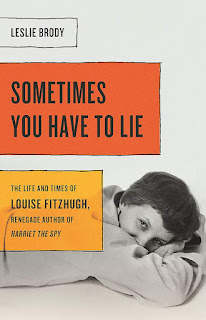
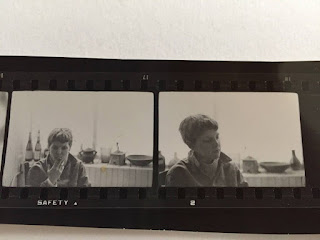
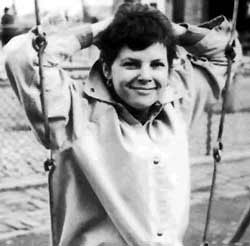
SOMETIMES YOU HAVE TO LIE: The Life and Times of Louise Fitzhugh, Renegade Author of Harriet the Spy By Leslie Brody


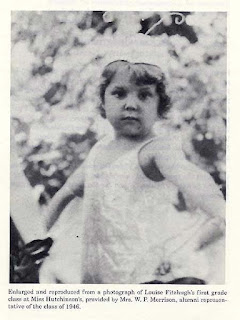
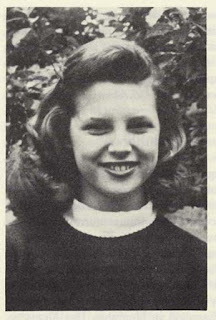
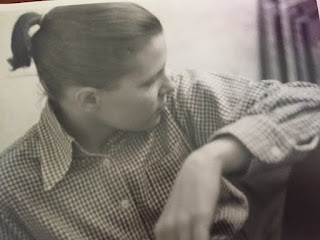
Interesting if thin biography of Fitzhugh. There was an earlier one from 1991 by Virginia Wolf that is apparently more scholarly. This one is decidedly not. Brody does a lot of speculation about what Harriet might have done, whom she might have, how she might have felt. She does talk to secondary sources, and has some access to correspondence. Her lifelong correspondence with James Merrill and Peter Taylor would be interesting to see. But the photo section is  paltry and it seems like an entire book could be made of Fitzhugh's paintings, drawings, and illustrations. Each published book is plot summarized at length. There's a lengthy afterword explaining the tight control over her unpublished work exercised by her estate (which I would have preferred as a preface). And Fitzhugh's final years are covered in snap - she died suddenly of a brain aneurysm in 1974 at the age of 46. And the decline must have been sad.

She drank too much and seemed to suffer from manic depression/bipolar. There is a real sadness behind it all that is intermittently touched upon.

Fitzhugh was a monumental figure in both her revolutionizing of children's literature, and the strong unapologetic presentation of her sexuality.



Thursday, February 03, 2022

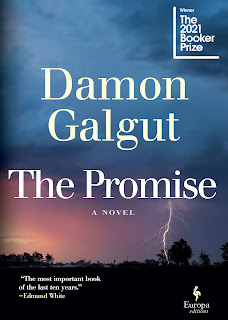
The Promise by Damon Galgut


Really like this unusual book. I don't know if it's "the most important book of the last ten years," as Edmund White blurbs, but Galgut's style and voice are unique. Time progresses back and forth, past, present and future, and side by side as well, leap-frogging the point of view from a major character, to a minor character, to a slightly more prominent minor character, then back to a main character - and time has passed in the shuttle of lives.

The Lord's creation is amplified when you use heightened language to describe it. [71]

Perhaps she doesn't pray in these words, or in any words at all, many prayers are uttered without language and they rise like all the rest. Or perhaps she prays for other things, because prayers are secret in the end, and not all to the same god. [83]

Sidewalk by Mitchell Duneier


Another fascinating urban ethnographic fieldwork study by my old college chum Mitchell Duneier. He spends several years among the sidewalk magazine vendors on Sixth Avenue in Greenwich Village, NY, delving deeply into the culture, commerce and psychology of the mostly "unhoused" African American men who created a micro economic ecosystem in order to maintain their own self-respect.

To be sure, there are some "broken windows" on these blocks. But mostly there are windows that look broken to people who are just passing by. Because Americans ruthlessly use race and class categories as they nagivate through life, many citizens generalize from the actual broken windows to all the windows that look like them-- and assume that a person who looks broken must be shattered, when in fact he is trying to fix himself as best he can. Only by understanding the rich social organization of the sidewalk, in all its complexitiy, might citizens and politicians appreciate how much is lost when we accept the idea that the presence of a few broken windows justifies tearing down the whole informal structure. [315]

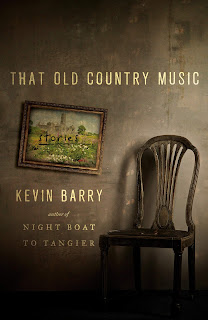
That Old Country Music by Kevin Barry


Great collection of short stories by the noted Irish novelist. I was drawn in by the final story, ROETHKE IN THE BUGHOUSE, about American poet Theodore Roethke's brief pungent nervous breakdown while visiting the West of Ireland. But all the stories are good.


You know they say it warms your three times, wood. When you cut it down, when you carry it, when you burn it. [35]

...proud as a hawk and poor as a wren... [73]

Love, we are reminded, yet again, is not about staring into each other's eyes; love is about staring out together in the same direction, even if the gaze has menace or badness underneath. [96]

"Marry the shop girl," she said. "Marry the factory line. Marry the barmaid. MARRY THE WHORE. But never, never marry the actress, Tony."

Monday, January 24, 2022

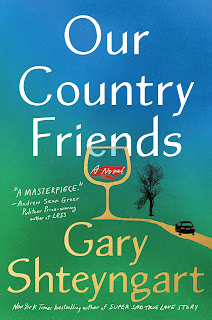
Our Country Friends by Gary Shteyngart


Like the first half very much but was disappointed with the second which I found hasty, melodramatic, and mis-focused. 
Set squarely in the current moment, the novel follows five months in upstate New York where three old dear college friends and several others sequester to escape the virus.


But he had to think like a character in a Chekhov play, forever taunted by desires but trapped in a life much too small to accommodate the entirety of a human being. [120]

Monday, January 17, 2022

Rizzio by Denisa Mina

Good weird one from the accomplished Scottish police/procedural novelist. But just a long short story, really.

Tuesday, January 11, 2022

Ghetto by Mitchell Duneier


A very interesting sociological history of the American "ghetto," tracking its origins (at least eytmologically) to the Venetian ghettos of the 1500s, where Jews were sequestered. My old college chum analyzes a handful of scholars since the 1940s who have attempted to quantitize and reason out how the American ghetto began and how it might be corrected. Among other revelations to me, Duneier traces the origin of the concept of "white privilege" to Blauner in 1972.

This made it easier for the Nazis to take the genocide to the Jews than to take the Jews to the genocide. [218]

The Magician by Colm Tóibín


Excellent if a little muted. I feel ashamed to have never finished any of Thomas Mann's full-length novels, though I continue to return to them, so it was a guilty pleasure to read this novelistic treatment of Mann's life. 

Toibin was reportedly motivated by the release of Mann's private journals and letters, which demonstrated his erotic attraction to men. The novel is undercut with a running thread of Mann's conscious and subconscious sexual feelings for men and his apparent decision not to act on them.  At the same time, he had six children with his wife Katia in what the novel illustrates as a lively, loving marriage.

Mann was a celebrity author and his children and brother suffered from his fame. According to Toibin's novel, he lived mostly for his work, in his study, and left the emotional upbringing of his children to his wife.

Worthwhile but strange.

Monday, January 10, 2022

Crossorads by Jonathan Franzen


Mixed feelings. Definitely too long. First half sailed past me promisingly, but in second half I got bogged down. Another cast of increasingly unsympathetic characters. The faith stuff was good for awhile, but hard to believe that the parents, and son Clem and daughter Becky, would all think (and speak) so profoundly about their faith strengths and disappointments.

Monday, December 27, 2021

The Bushwhacked Piano by Thomas McGuanebath

There was nobody here to make him see the world as a mud bath in which it is right tough to keep showing a profit. He invented a joke to the effect that blood was always in the red and death was always in the black; and thought: What a great joke! (35-36)

In the past, he had run up and down America unable to find that apocryphal country in any of its details. His adrenalin cortex spumed so much waste energy that a lot of amazing things happened. And he deliberately changed his highway persona day by day; so that, across the country, he was variously remembered for his natty dress, for his opposite of that, for his persistent collection of “data,” for his arbitrary and cyclonic speechmaking, for his avowed devotion to his mother and father, for his regular bowel movements, for his handsome rather loosely organized mock-Magyar face, for his tiny library and transistorized machines locked away in ammunition tins, for his purported collection of the breakfast foods of yesteryear, and for his habitual parabolic coursing through the U.S.A. with attendant big trouble, pursuits and small treasured harbors of calm or strange affections along traveling salesman lines, facing enemies with billboard-size declarations of a dire personal animus, cluttering hundreds of small midland streets with regrettable verbs and nouns, sharp ones, heavy ones and ones which made barricades and tanktraps in peaceful summer villages where no one was asking for trouble.

In most ways it had been an awful strain, one he’d been glad to finish. Now, being on the verge of it again, he felt an uproarious tension in his mind. (40-41)
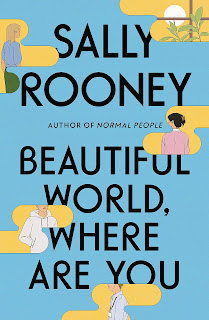
Beautiful Worl, Where Are You by Sally Rooney


I have similar complaints about this novel to the ones I had about her NORMAL PEOPLE of several years ago.  But that one I ended up liking. This one is too much. The dialogue is simply not credible -- not to mention the tediously long, trumped-up email/letter exchanges. No one speaks like that. And her cast of characters are some loathsome, self-obsessed, privileged folk.

Nothing happens in this book except for dialogue, and some sex. Way too much dialogue and not enough sex. Although some of the dialogue is about sex, which I suppose should count fractionally to her credit.

The three childhood friends, two women and a slightly older man, and one other man, circle each other warily in a fog of hurt feelings, disappointments, and subtle reprovals. The character Felix, who seems to work in an Amazon-like distribution warehouse, is the closest thing to a real-life blue-collar class struggler we get. And his biggest injury is a paper cut. The famous novelist Alice apparently had a serious nervous breakdown and continuing psychiatric problems mostly because of her success and the way she has legions of fans who think they know her and think they love her or hate her. Boo hoo.

That said, she has a crystalline prose style.

To those who would say she is the millennial generation's Henry James - well, ok, no one said that, and I'm just saying that for straw man fun - I would say, There is something to her inquisitive rational dissection of human feeling and emotion that recalls the master.

How much of this is sour grapes, my envy at Rooney's success? 33 to 37%. How much of this is being spiteful for fun? 8%. I should write more, if I truly dislike it that much, or should not have written at all.  It's a draw.

Sunday, December 19, 2021

Key West Writers and Their Houses by Lynn Mitsuko Kaufelt


So far I've only read the Thomas McGuane entry (natch) where I discovered his personal favorite among his novels is PANAMA, which is also the least well-known, and also, coincidentally, my favorite. 1986 publication that might well have changed from McGuane, but not for me! Black and white photos. Xmas gift from my dear friend Steve Hayes.

Arcadia by Lauren Groff


Hippie commune novel. Acclaimed. Withholding judgement. Elegant writing so far, but slow going.

Filthy Animals by Brandon Taylor


Disliked first story, liked second story. Stay tuned.

The Invisible Man by H.G. Wells


Hesitate to call it science fiction, as it's a very realistic social commentary on what we would do if an invisible man was in our midst. Particularly like the IM's Beckettian slave Mr. Marvel, whom he enslaves to carry around all the money's he's stolen, as the IM can't carry stuff. And so on.

Artemis by Andy Weird


Underwhelming. Least favorite of his three novels. His "female narrator" voice not convincing.

Featured Post

Buy my books.

Buy the books on Amazon, and watch videos of some readings.   Please.